
Antique Genothalmic Retinoscope 1915 | Electric

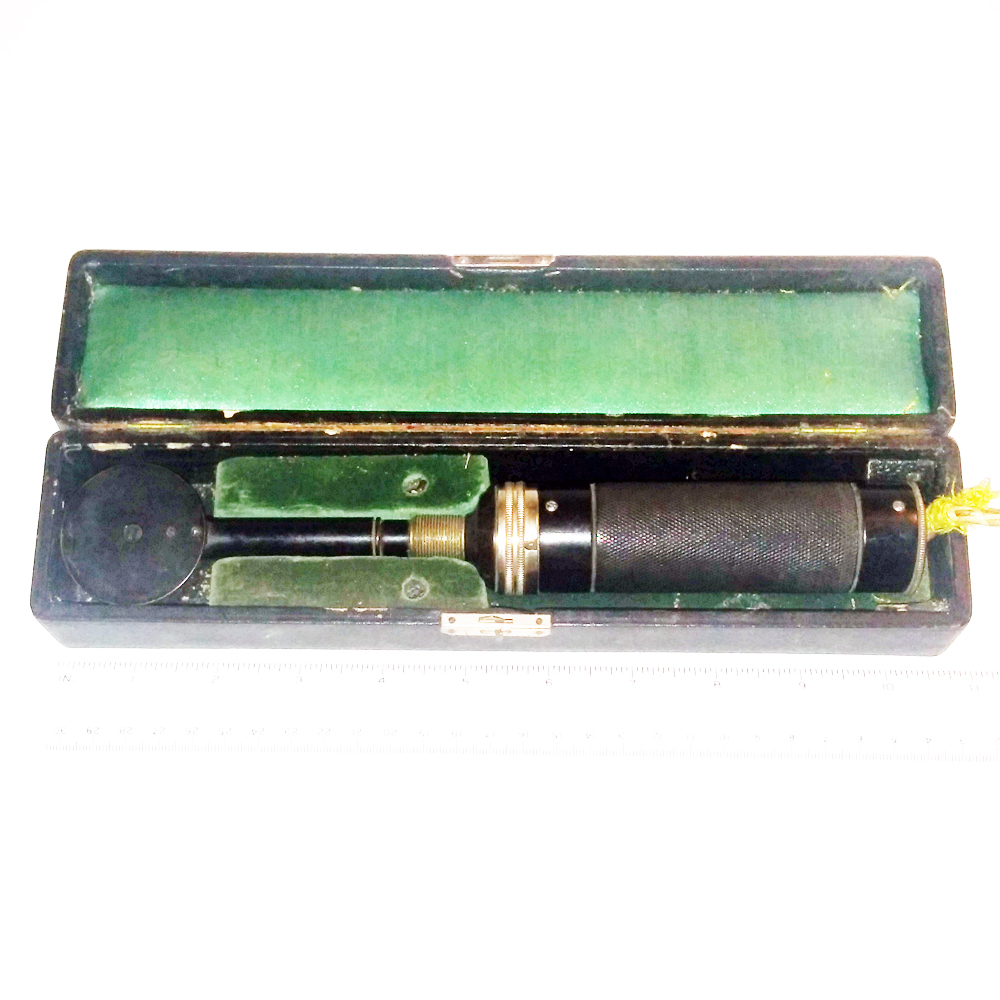


The Antique Genothalmic Retinoscope 1915 is a rare and technically interesting instrument. It represents an important early example of electrically powered ophthalmic examination equipment. This model was among the first supplied by direct electric current rather than reflected light or batteries. That shift marked a significant step forward in the standardization and reliability of retinoscopy. Electric power was just becoming widely available in clinical settings at this time.
Mirror and Focus Adjustment
The retinoscope features a round angled mirror with a 2mm central opening. Through this opening, the examiner observes the reflex of light from the patient’s retina. This reflex helps determine refractive error accurately. A knurled ring at the base of the neck slides up and down. This adjusts the light focus and lets the examiner switch between streak and spot retinoscopy techniques. A silver-colored rheostat ring at the top of the base provides precise control over illumination brightness.
Paired with a Dedicated Transformer
This instrument was designed for use with the Transformer for Genothalmic Diagnostic Instruments, which connected it to the electric supply. That transformer is marked at 115 volts and 60 cycle AC. It features a screw attachment for plugging into a lamp-type socket. This reflects the practical realities of clinical electrical supply in the early twentieth century. Together, the two pieces formed a complete, self-contained examination system for practices adopting electric diagnostics.
A Significant Collectible
This Genothalmic Retinoscope stands today as a highly collectible and historically significant piece. It survives in fine original condition, making it especially valuable to collectors and historians of ophthalmology. The instrument documents a pivotal transition period, when clinical practices moved away from reflected-light and battery-powered tools toward dependable direct electric current. Anyone studying the history of retinoscopy will find this piece a compelling, tangible link to that transformation.