
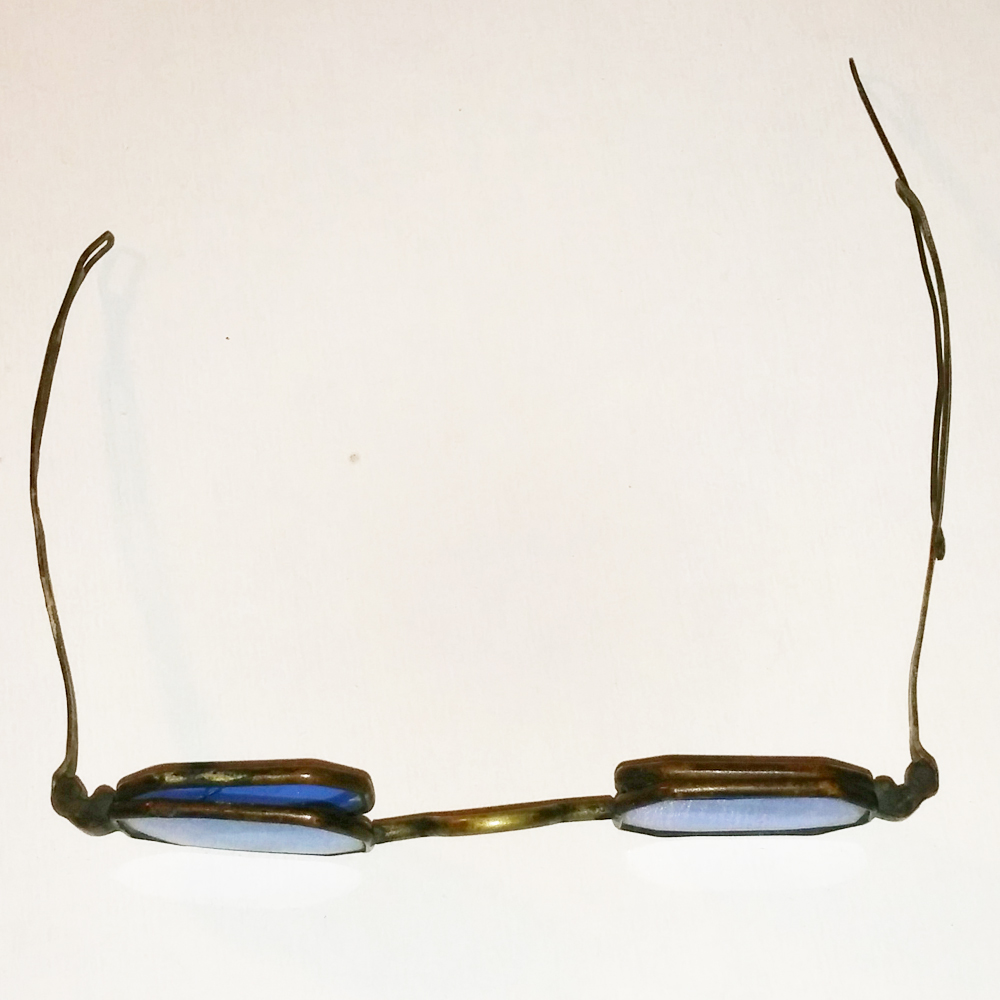
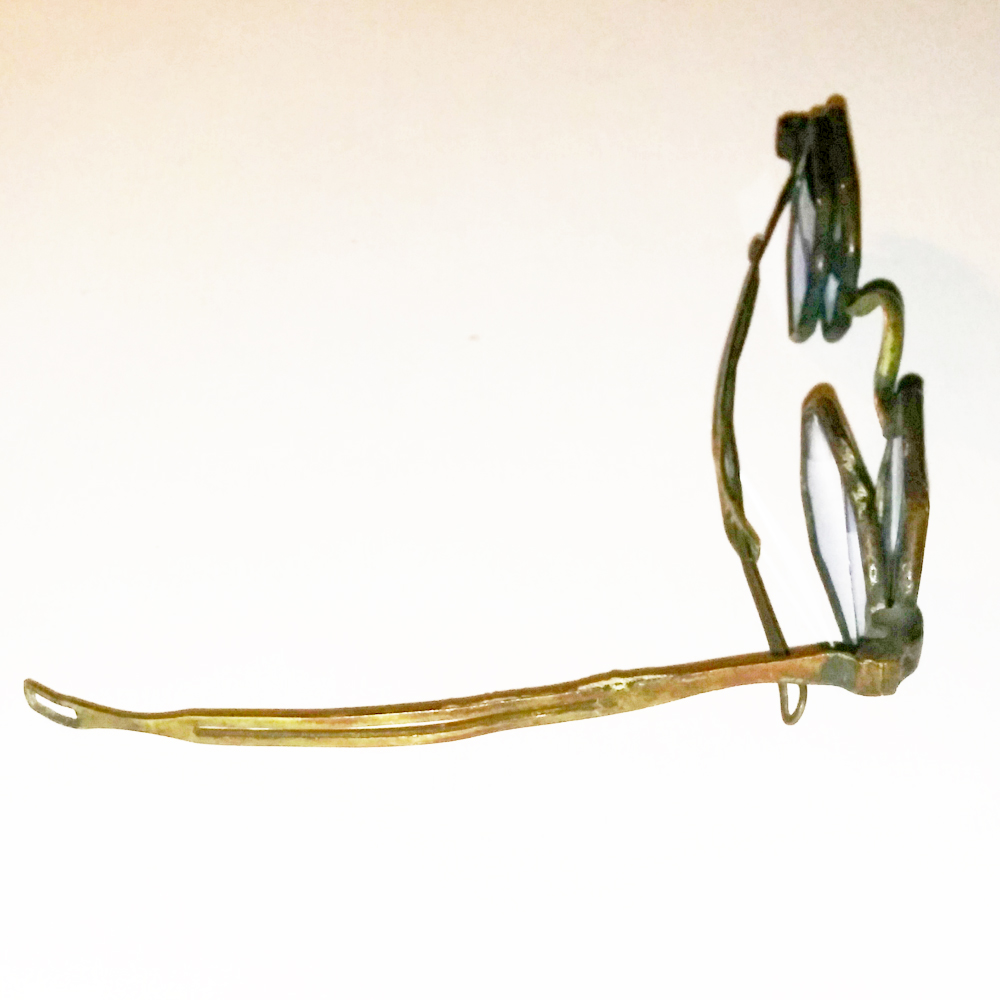
Double Blue Lens Spectacles 1830 | Octagonal
A Mysterious Power Behind the Blue Lens
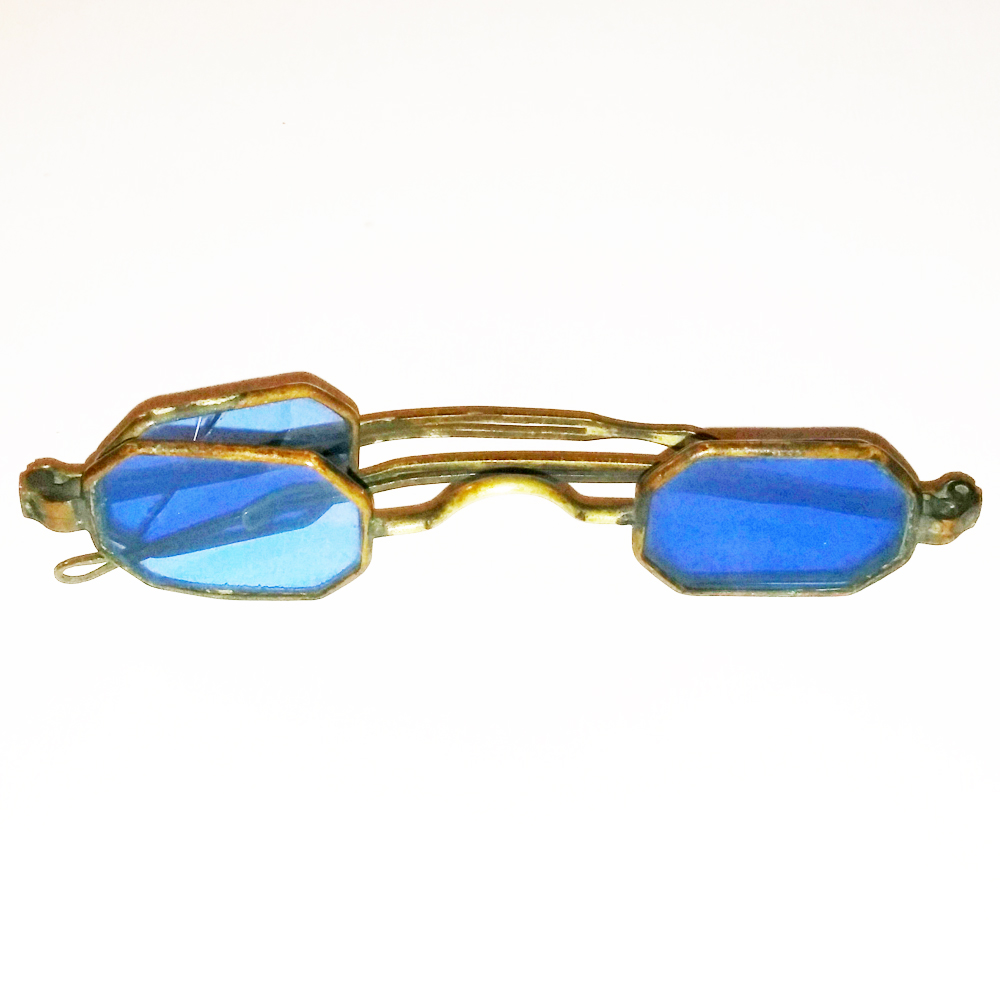
These double blue lens spectacles date to 1830. They belong to a fascinating chapter in eyewear history. According to Rosenthal’s “Spectacles and Other Vision Aids,” scientist, Robert Hunt, made a curious discovery in 1854. He found that sunlight passed through a plano blue lens, then focused onto a compass needle, could actually magnetize it. No other colored lens produced this effect. As a result, the blue lens became immensely popular throughout the 1800s. People believed it held some mysterious power.
An Ingenious Folding Design
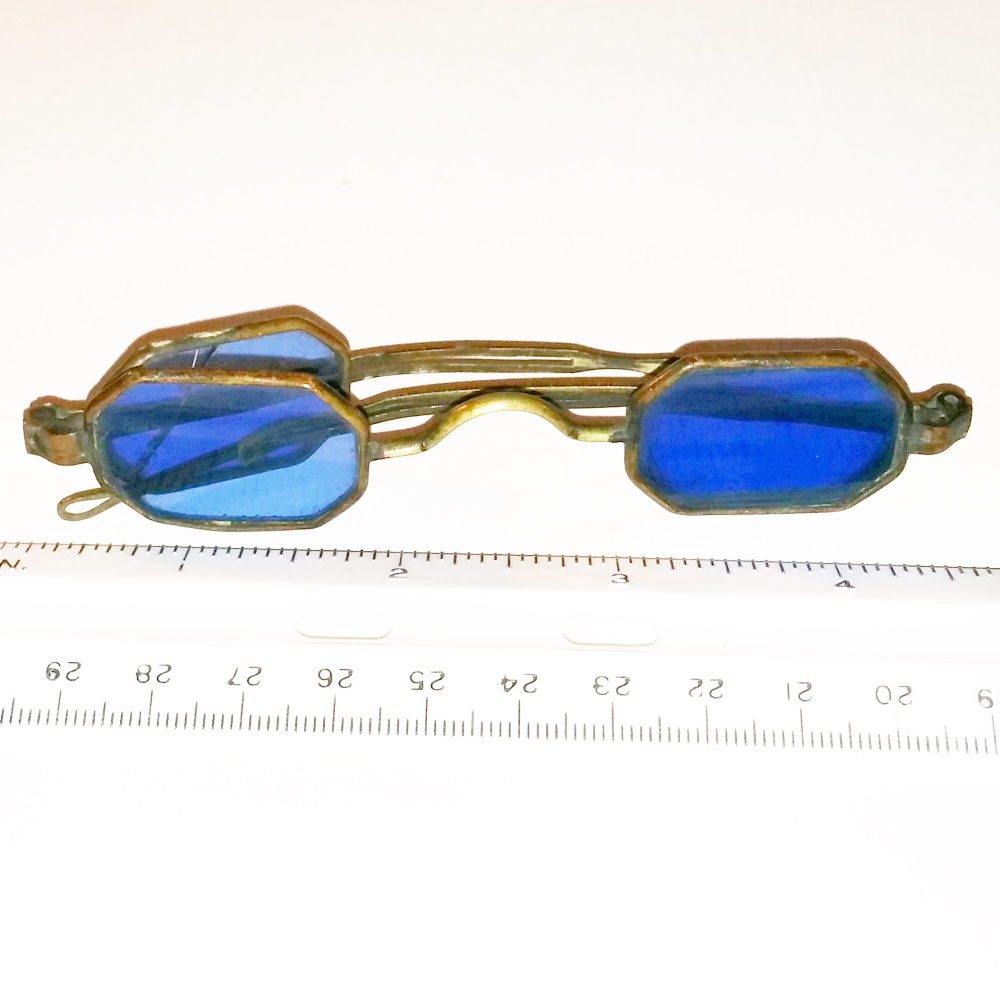
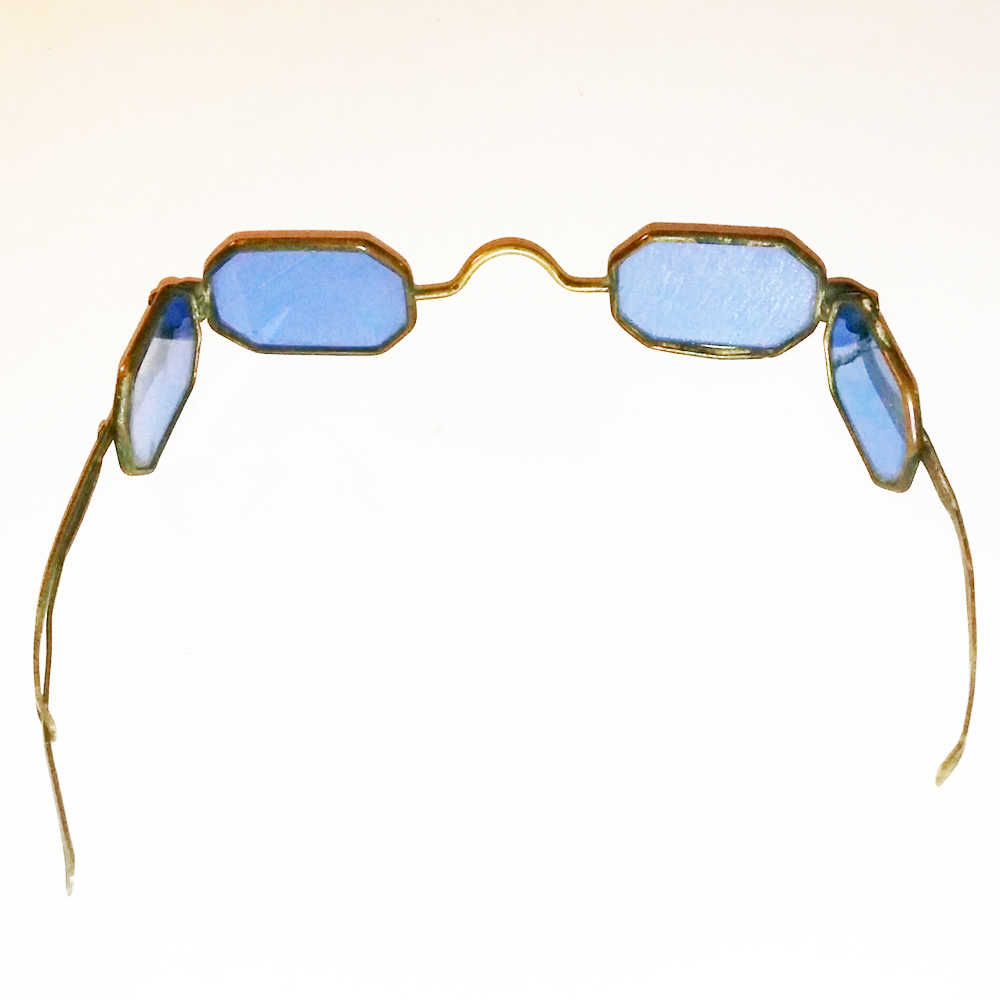
The octagonal frames hold plano, or no-power, blue glass lenses. These fold in and out of the wearer’s line of sight, much like the green-lens style from the same era. This flip-down mechanism gave wearers flexibility. They could shift between clear vision and tinted protection without changing eyewear entirely. Double blue lens spectacles like these represent a genuinely inventive solution from decades before modern clip-on sunglasses existed.
Condition and Craftsmanship
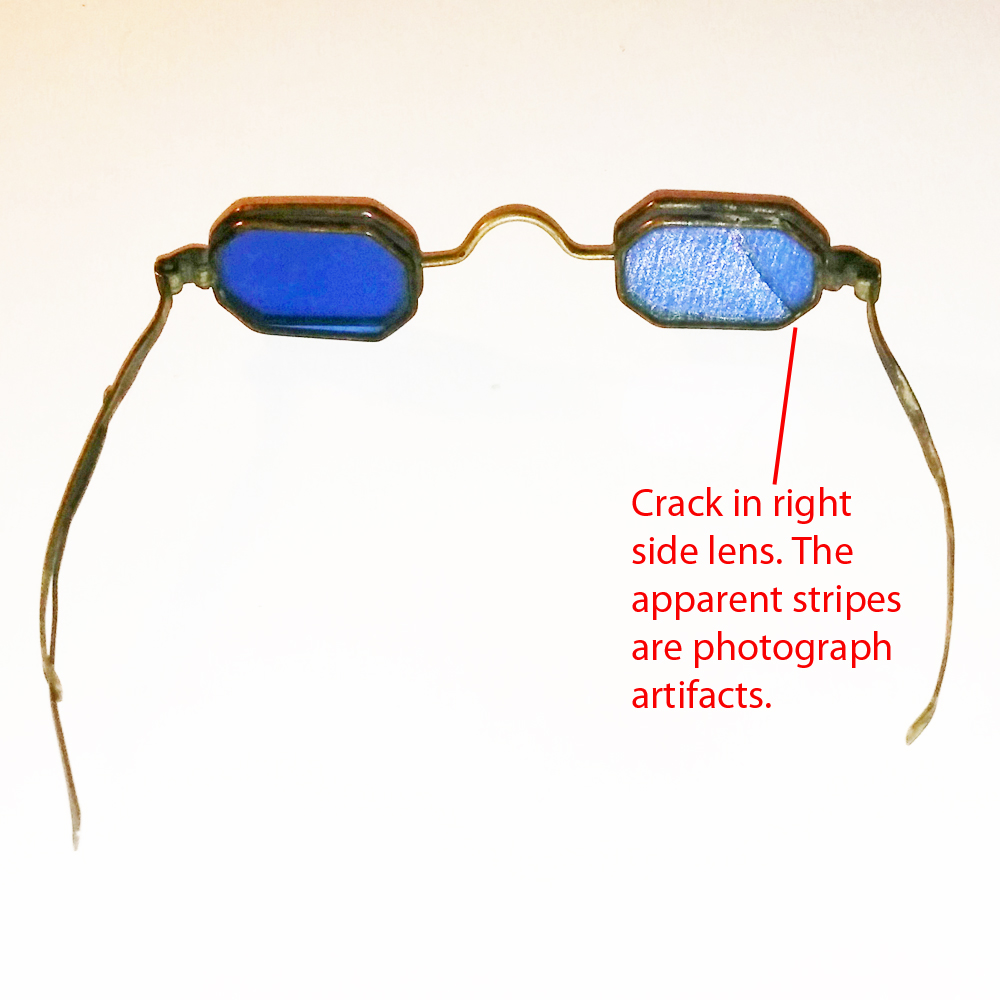
The right side lens shows a diagonal crack. It runs cleanly across the glass but does not compromise the frame’s structural integrity. The left temple has also lost its sliding piece, the small mechanism that once let the temple extend to fit the wearer. Despite these age-related issues, the frame itself remains intact and displays the fine octagonal detailing typical of 1830s eyewear craftsmanship.
A Companion to Our Green Lens Pair
Collectors drawn to this piece may also want to see our octagonal double green lens spectacles. This related pair comes from the same period. Together, both styles capture the era’s genuine fascination with colored lenses and their believed protective, even magical, properties.