
Bausch Chest Type Microscope 1874 | J.J. Bausch

J.J. Bausch and the Origins of American Microscopy
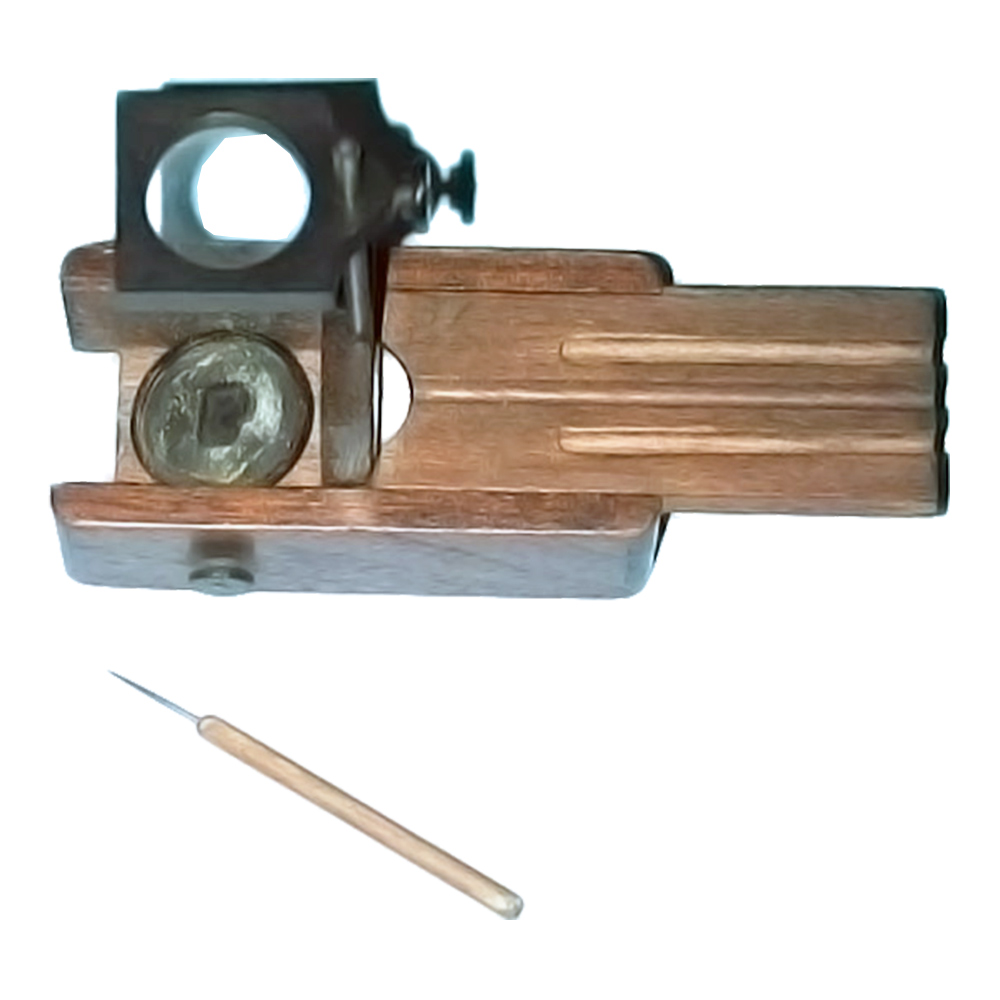
The Bausch chest type microscope is a compact folding microscope patented by J.J. Bausch on June 9, 1874. John Jacob Bausch was a German immigrant optician who co-founded Bausch & Lomb in Rochester, New York, in 1853. He built that firm into one of the most important optical companies in American history. The “chest type” name describes the instrument’s clever folding design. It collapsed flat for storage and travel in a small case. This made precision microscopy available in the field, at the bedside, or anywhere far from a fully equipped laboratory.
Inside the Bausch Chest Type Microscope
A brass optical head sits atop a wooden stage and base. This combination was typical of American microscope construction in the 1870s. Makers balanced optical precision with the practical warmth and workability of wood for the structural components. A mirror mounted below the stage originally directed ambient light upward through the specimen for transmitted light microscopy. In this example, the mirror no longer functions, though the rest of the mechanism survives intact. The folding hinge allowed the entire instrument to lie flat, protecting the optics during transport.
Tools and Construction for Field Use
This compact unit includes a dissecting-type needle on a wooden handle for maneuvering specimens. That accessory reflects the instrument’s intended role as a field naturalist’s or physician’s portable examination tool. Naturalists, doctors, and students all valued instruments they could carry beyond the laboratory. The Bausch chest type microscope filled that need at a moment when American optical manufacturing was still finding its footing. You can read more about the firm’s broader history at “Bausch & Lomb” .
A Landmark in Bausch & Lomb History
The 1874 patent places this instrument at the very beginning of Bausch & Lomb’s rise to optical prominence. It stands as a historically significant early example of American precision optical manufacturing. Collectors of microscopy antiques and American industrial history alike will find this a compelling piece. Browse related instruments in our “telescopes and binoculars collection” .