
Antique Drum Style Microscope | Benjamin Martin Brass

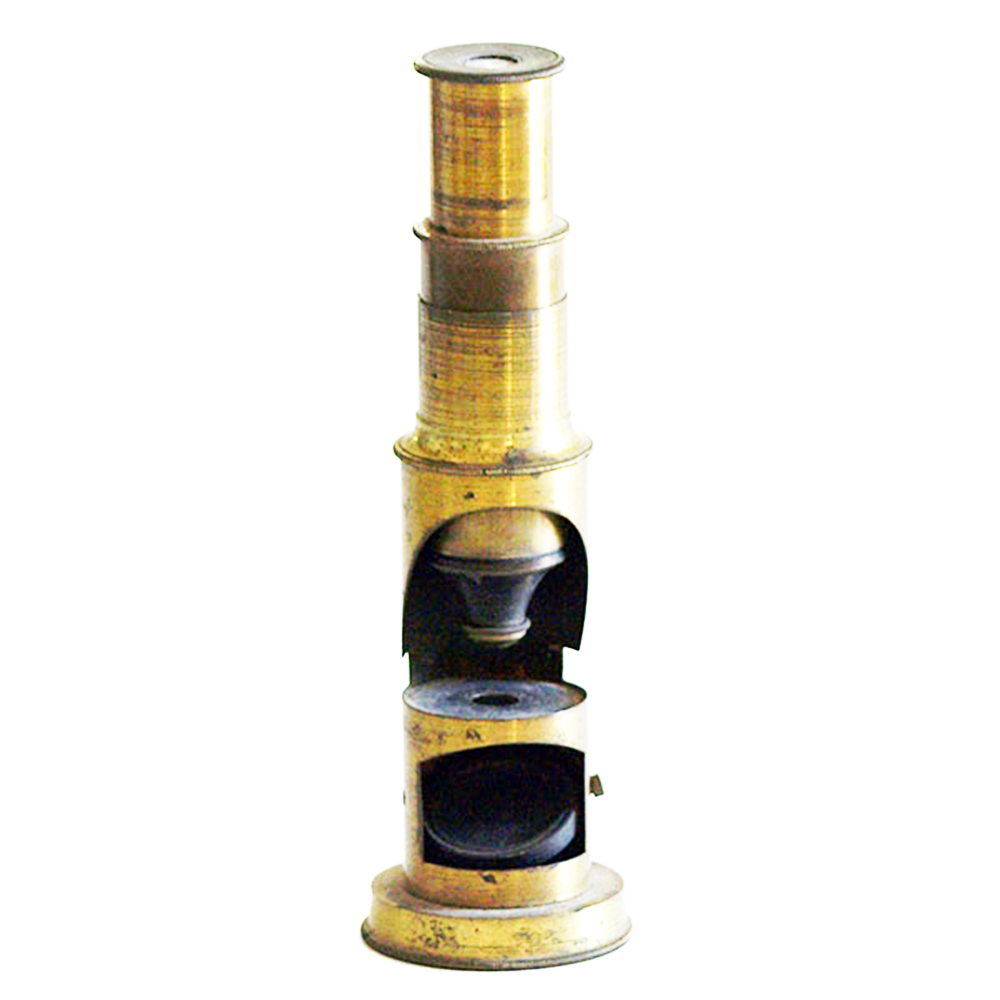
Drum Style Microscope Antique — Vintage Benjamin Martin Design Brass Microscope
This antique drum style microscope is a handsome representative of one of the most historically significant microscope designs ever produced. Benjamin Martin — of “Martin’s Margins” spectacle fame — invented the drum microscope design in the 1750s. It then enjoyed a remarkable resurgence in England during the 1820s to 1860s as an affordable and accessible instrument for students, hobbyists, and the growing middle class with an interest in natural science. This example, in polished brass with its characteristic cylindrical body and circular stage, captures that democratic spirit perfectly.
Benjamin Martin and the Drum Design
Benjamin Martin was one of the most influential scientific instrument makers and popularisers of science in 18th century Britain. His drum microscope design takes its name from the cylindrical drum-shaped body that houses the optical components. That form represented a deliberate effort to make microscopy accessible beyond the wealthy elite who could afford elaborate compound microscopes. Furthermore, the design proved so practical and appealing that it remained in production for well over a century after Martin first introduced it.
From Quality Instruments to Popular Science
These instruments typically appeared unsigned, produced by numerous makers for the trade at accessible price points. In France, some of the higher quality instrument makers of the 1840s and 1850s — notably Oberhaeser — adopted the drum style and fitted it with top quality optics and accessories. By the late 19th century, however, many French makers had returned to producing small unsigned models of low quality, sold as toys and for hobbyists. Nevertheless, these continued to sell in two styles — single pillar from stage to body tube, and dual struts — well into the 1920s. They turn up regularly in antique shops today.
Construction and Condition
This example features the characteristic polished brass cylindrical body and circular stage of the finest drum style examples. The construction reflects the serious scientific instrument tradition from which this design emerged. Moreover, the drum microscope’s significance lies not just in its optical capabilities but in its role as a democratising instrument — one of the first scientific tools designed and priced to bring the microscopic world within reach of the curious amateur. Browse the full antique telescopes and binoculars collection for more optical instruments from this tradition.
Historical Legacy
The drum style microscope bridged the gap between elite science and popular curiosity. As a result, it holds a unique place in the history of scientific instrument making. For broader context on the microscope’s history, the Science Museum Group’s microscope collection provides excellent reference material.