
DeZeng Refractometer | Antique Objective Refraction Tool
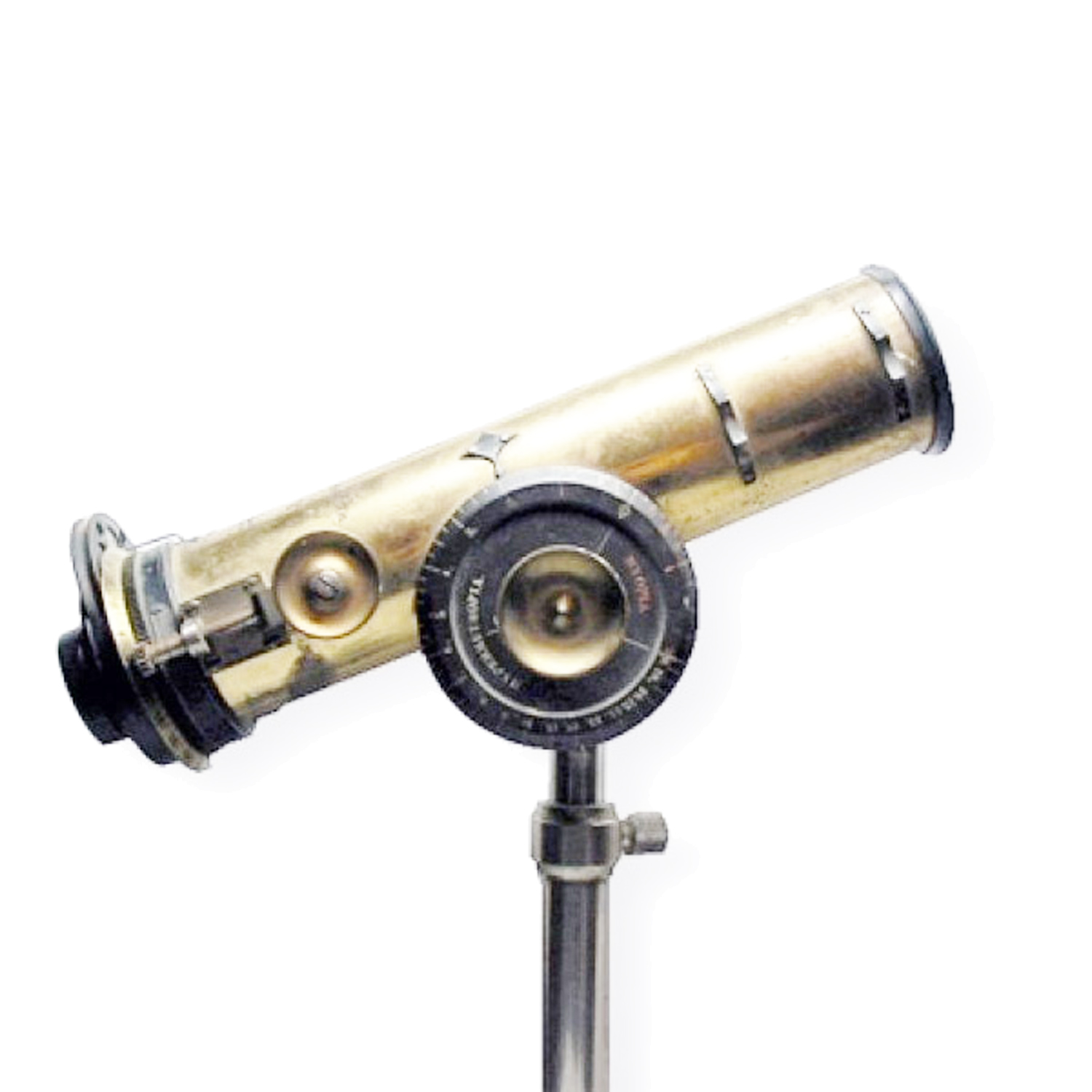
The DeZeng Refractometer: A Landmark in Ophthalmic History
The DeZeng Refractometer stands as one of the most important early attempts to create a self-contained objective refraction device. Henry DeZeng Jr. of Geneva, New York patented this instrument on December 3, 1885. Several major optical firms marketed it, including Spencer Lens Co., Bausch & Lomb Optical Co., and the Cataract Optical Co. of Buffalo, NY. For those interested in the history of refraction instruments, this device marks a pivotal moment in the development of modern eye examination equipment.
How the Examiner Uses It
The examiner begins by having the patient view an object through the eyepiece. Then the examiner rotates the dials until the object appears most clear. The main viewing barrel measures approximately 8 inches long. It sits on an adjustable cast iron tripod standing roughly 20 inches tall. Behind the eyepiece, a rotating wheel of lenses offers various powers. A graduated dial on the side provides adjustments for both myopia and hyperopia.
The Lens Wheels and Cylinder System
Two wheels of lenses sit at the eye end, each with seven openings. Both wheels carry the marking “concave cylinders.” Together, they rotate on the optical axis via a geared drive. The peripheral degree scale reads “axis register.” Inside the outer cylinder, a front barrel switches in and out as needed. The top scale runs from 0 to 9 and covers myopia, concave, and spherical positions. Furthermore, a 3-inch circular scale behind the focusing knob covers hypermetropia from 0 to 18 and myopia concave spherical from 0 to 15.
The Challenge It Could Not Overcome
The instrument faced one fundamental problem. The eye’s natural ability to focus through accommodation could throw off the refraction result. Consequently, the DeZeng Refractometer never replaced the trial lens set and retinoscope in clinical practice. However, it remains a highly prized collectible for historians of optometry and ophthalmology. Explore our full range of antique eye exam equipment to discover more extraordinary instruments from this era.
A Visually Spectacular Collector’s Piece
The nickel-plated brass construction is immediately striking. The cast iron tripod with black enamel finish adds further drama. Few 19th-century eye examination devices survive in this condition. As a result, this instrument commands attention in any ophthalmic collection or museum display.