
Early trial lens set 1874


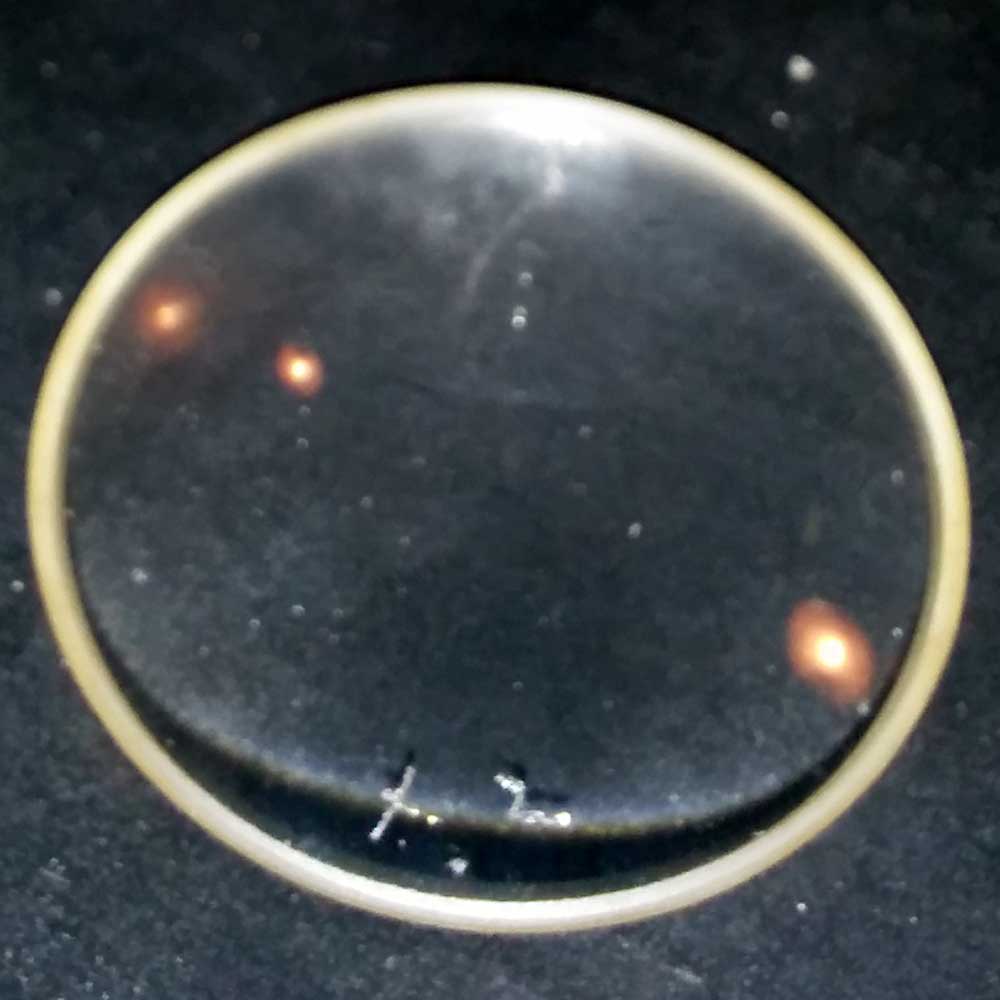

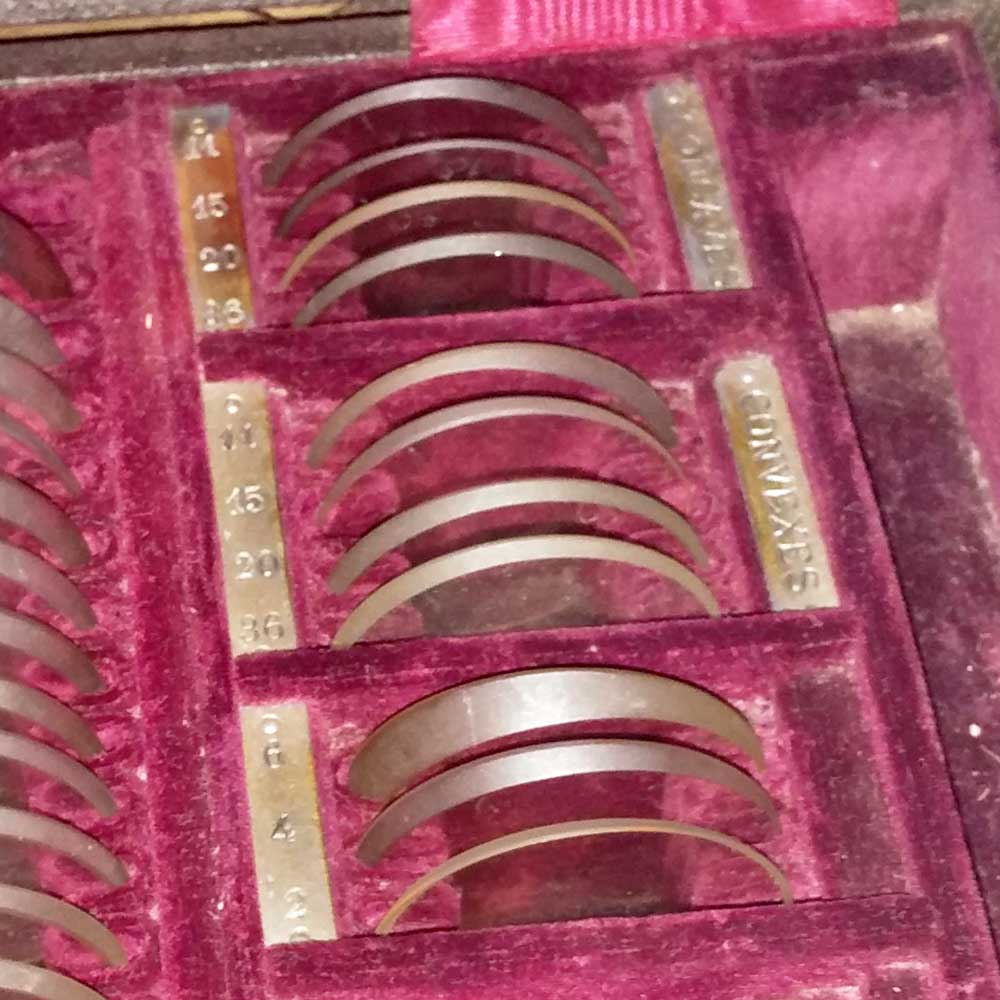


This early trial lens set, dating to 1874 and predating the standardization of the diopter system in 1875, is one of the rarest and most historically significant pieces in this collection — a tangible artifact from the precise moment when the science of clinical refraction was being transformed from an art based on inches and focal lengths into the standardized metric system still used worldwide today.
In 1863, Donders figured out how to reliably determine the power of a lens. In 1864, Monoyer, a French ophthalmologist, invented the diopter for describing lens power. Before this, lens power was described by its focal length in inches — and this trial lens set, marked in inches of focal length, represents that earlier system. In 1865 the diopter, based on the metric system, was adopted by the world at an ophthalmology conference held in Heidelberg, making pre-1875 trial lens sets marked in inches of focal length exceptionally rare.
This set consists of biconvex and biconcave lenses, each etched with its focal length in inches at its margin. There are 23 plus lenses and 23 minus lenses ranging from 2 inch to 48 inch focal lengths, along with 4 concave and 4 convex cylinder lenses (11, 15, 20, and 36 inches in focal length) and 3 prisms of 2, 4, and 6 units. The case measures 7.5 inches square and 2.25 inches in height, constructed of wood with a badly worn leather covering, two front latches, and a lid lined with red satin — the lens portion lined with red velvet.
Shortly after this style of trial lenses was used, trial lenses were made with metal rings around them to protect the glass. These unprotected lenses were put in a trial frame with a spring-like lever projecting upward to secure the lens in position while being used. This very rare unsigned trial lens set is from the earliest days of trial lens history, and represents a critical transitional moment in the standardization of ophthalmic refraction practice worldwide.