
Antique Foldable Cloth Perimeter with Test Marks and Cylindrical Case | Visual Field Testing Instrument
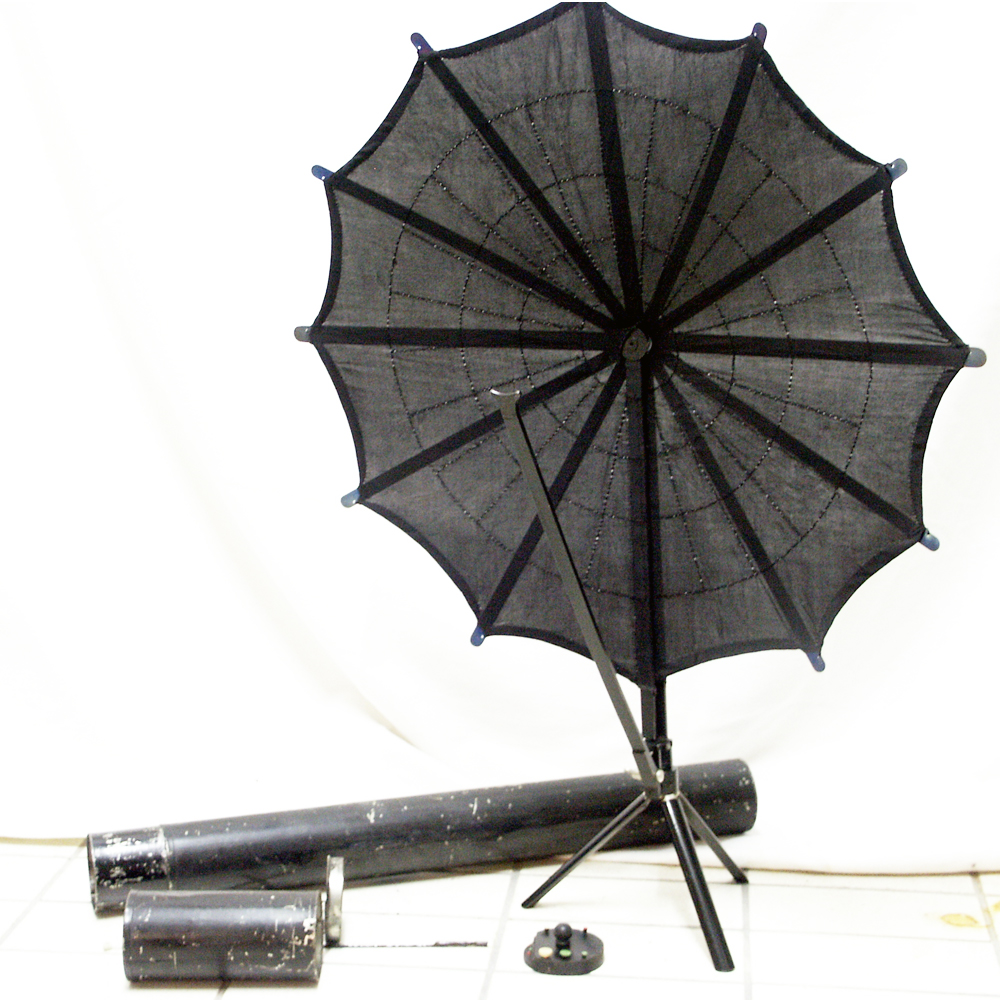
A rare and visually striking antique foldable cloth perimeter with original test marks and cylindrical storage container. The perimeter is one of the most important diagnostic instruments in the history of visual field testing, used by ophthalmologists and optometrists to map the extent and boundaries of a patient’s field of vision and detect areas of loss or defect.
This example features a foldable black cloth canopy stretched over a ribbed wire frame — much like a miniature umbrella — which would be positioned in front of the patient during examination. The test marks on the cloth surface served as fixed reference points, allowing the examiner to systematically chart which areas of the visual field the patient could and could not perceive. The folding design was a practical solution for clinical and portable use, allowing the instrument to be compactly stored in its accompanying cylindrical container when not in use.
Visual field testing with cloth perimeters of this type was a significant advance in the clinical assessment of glaucoma, retinal disease, neurological conditions, and other disorders affecting peripheral and central vision. This instrument represents an elegant intersection of functional design and diagnostic precision from an era when ophthalmic examination was rapidly evolving into a modern clinical discipline.