
Plastic Lens Inserts for Optical Seg Height
Plastic Lens Inserts for Measuring Seg Height
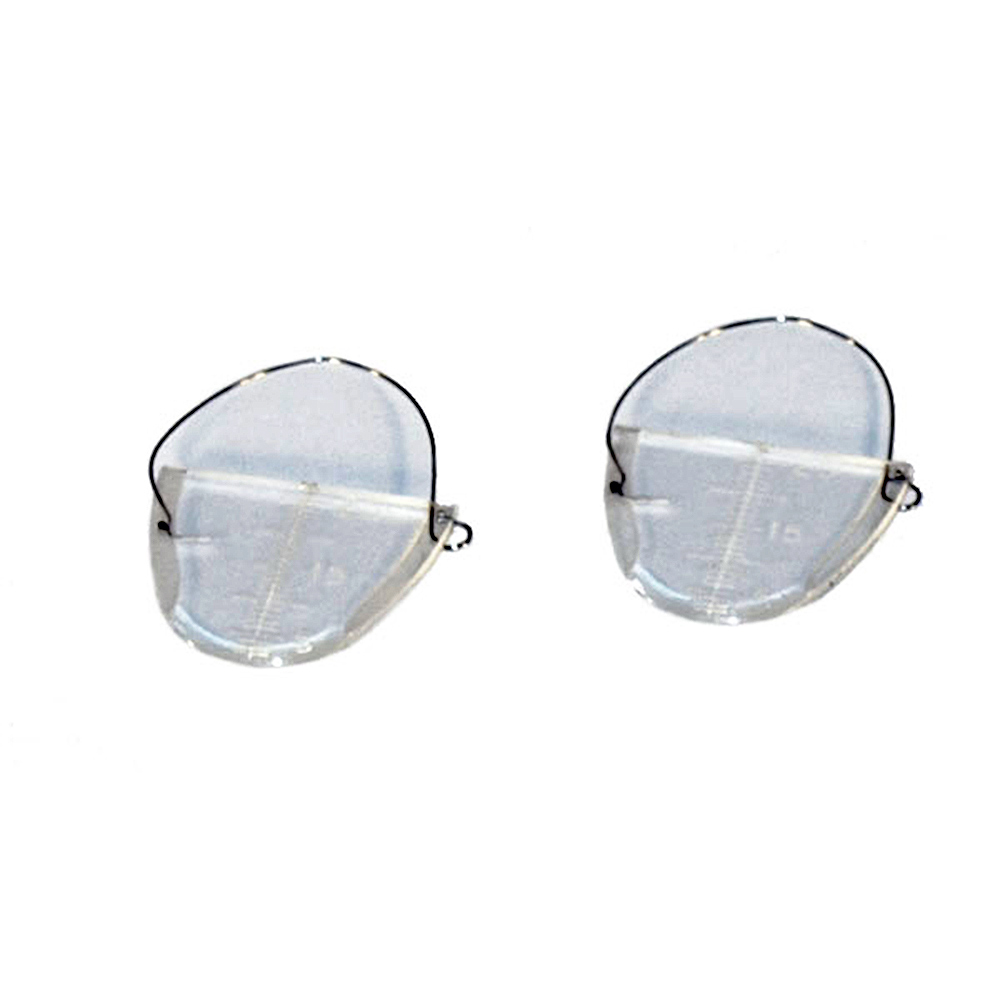
These antique seg height measuring inserts gave opticians a fast, reliable way to fit multifocal lenses correctly. Semi-elliptical and made from clear acrylic, each insert features etched millimeter markings. A flexible wire along the edge allowed the optician to bend the insert into the groove of a spectacle frame. As a result, it sat exactly where the finished lens would sit.
Why Seg Height Determines Success
Segment height measures the distance from the bottom of the lens to the top of the bifocal or progressive segment. When it’s wrong, patients struggle to find the reading zone. When it’s right, the glasses work effortlessly. Furthermore, errors in seg height cause eyestrain and patient dissatisfaction. Learn more about how multifocal lenses work and why this measurement matters so much in optical dispensing.
How Opticians Used These Seg Height Inserts
The optician placed the insert into the chosen frame while the patient wore it. Next, the millimeter scale showed exactly where the segment should begin relative to the pupil. This clever tool eliminated guesswork. Moreover, it saved significant time at the dispensing table. The College of Optometrists documents how practical tools like these shaped professional optical dispensing throughout the 20th century.
A Rare Find From the Optical Workshop
Acrylic lenses came into widespread use around 1940, placing these inserts in the mid-20th century. However, working dispensing tools rarely survived — opticians used them until they wore out. Therefore, finding a set in this condition makes them genuinely scarce. Browse our Eye Exam Equipment collection for more dispensing antiques, or explore our Spectacles museum to see the eyewear these tools helped fit.