
Trial Frame Nachet of Paris 1890 | Brass
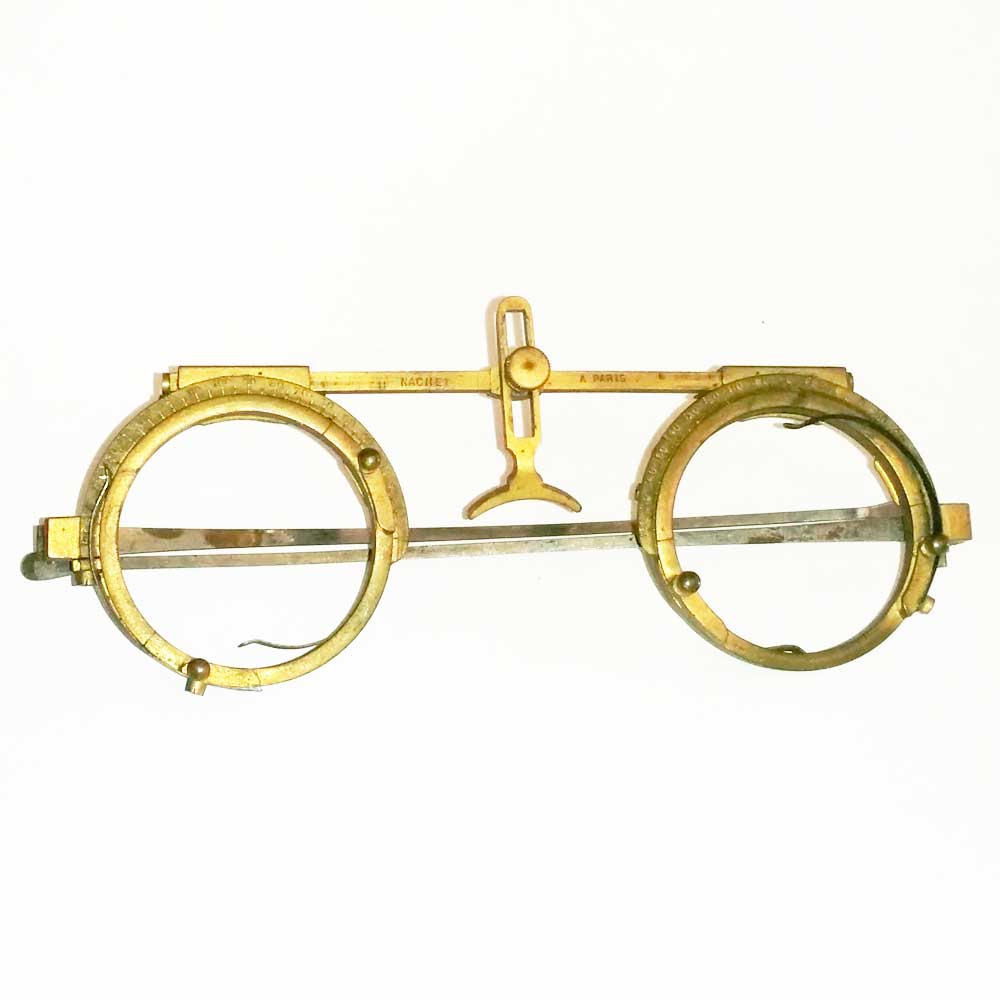
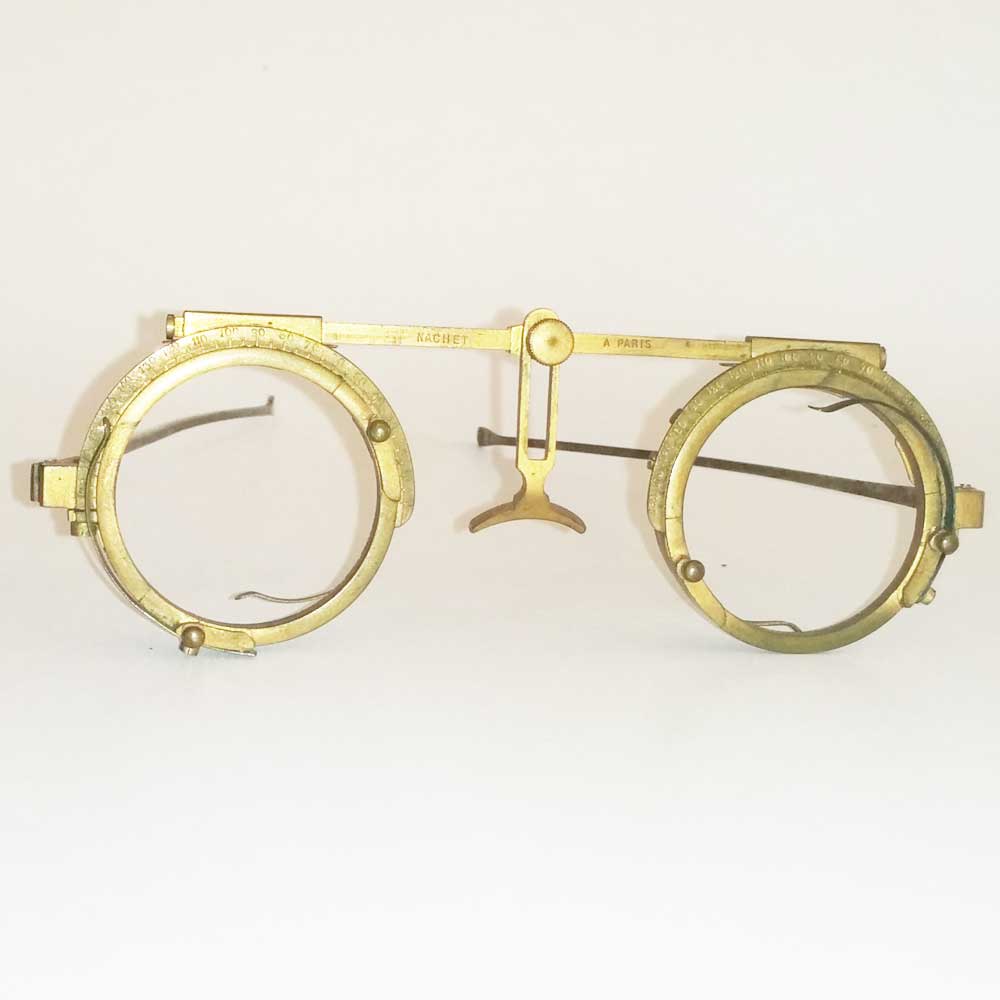
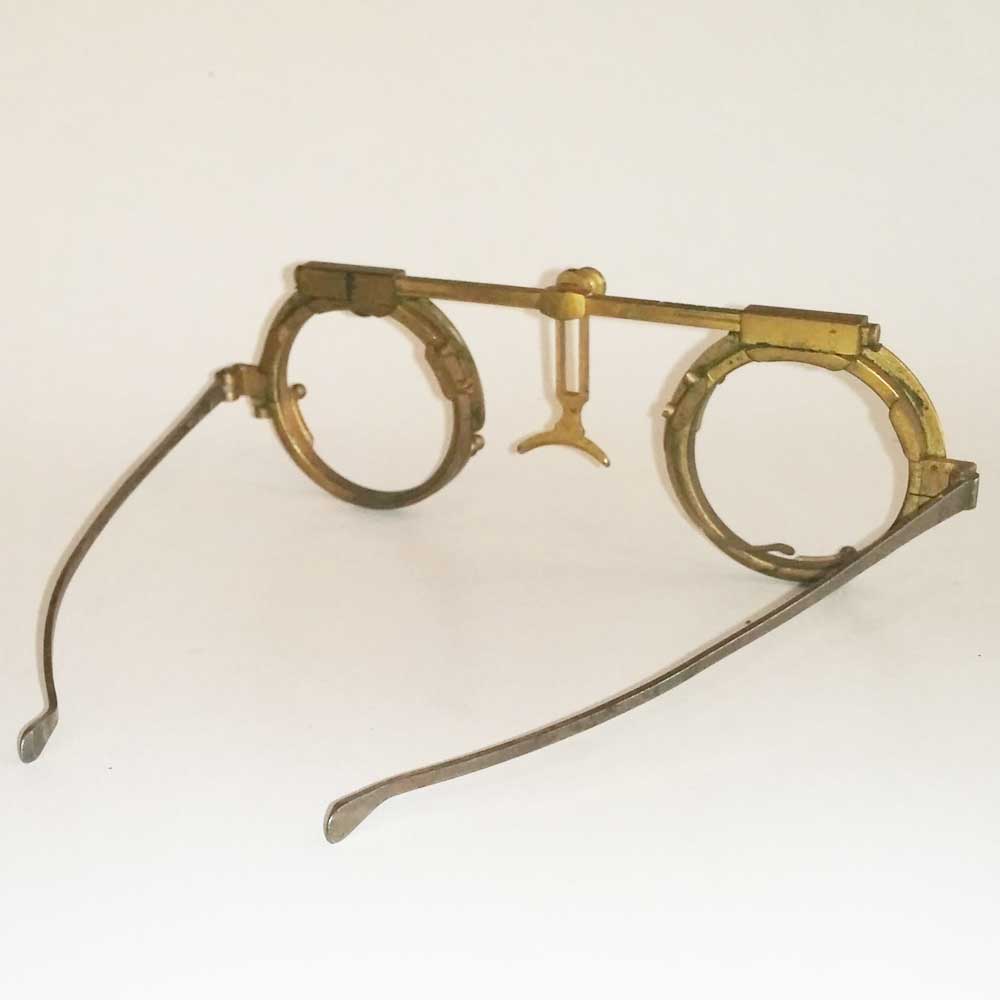
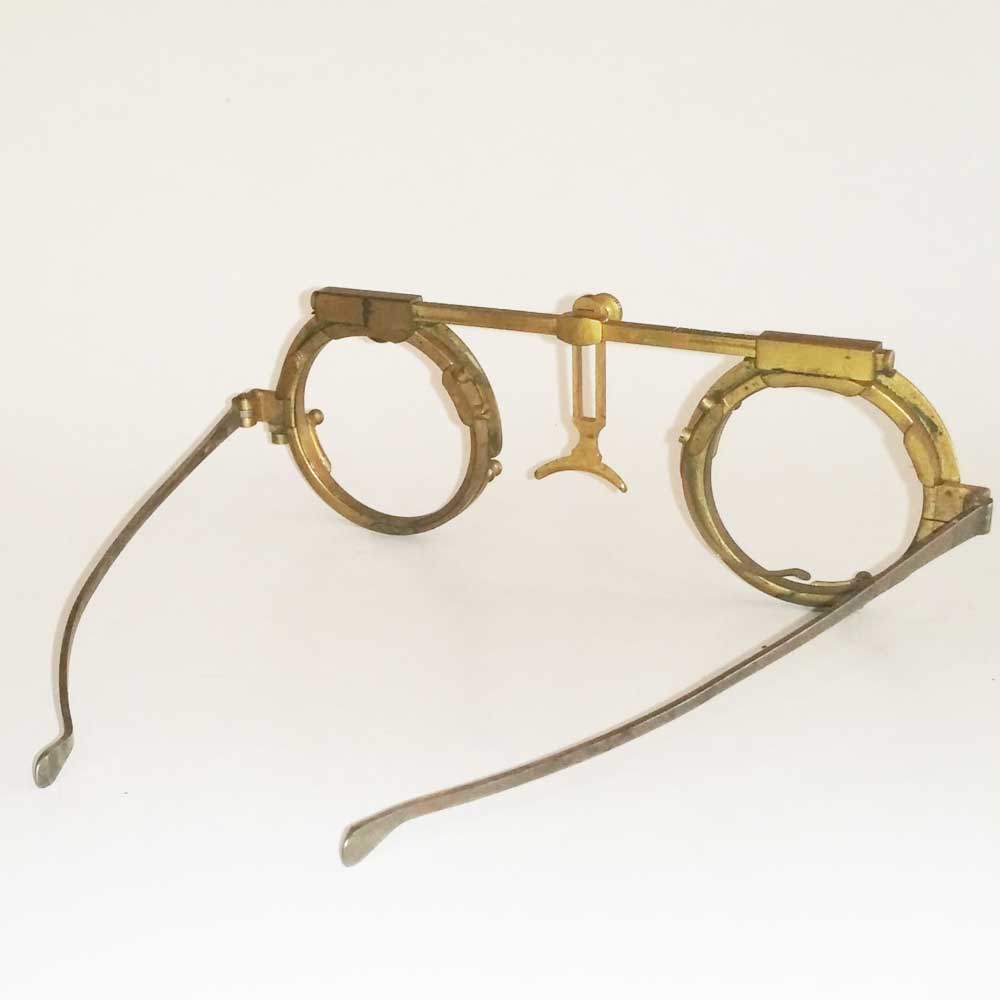
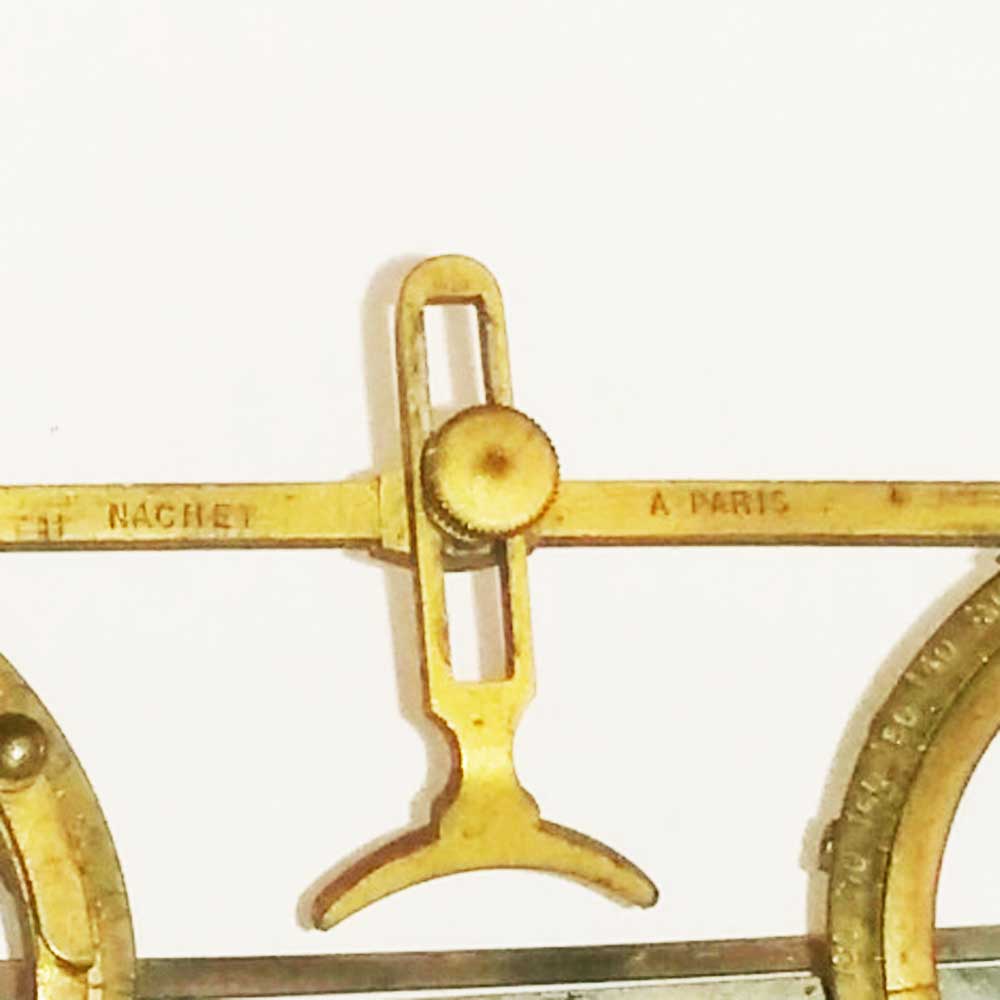
The Trial Frame Nachet of Paris 1890 predates the style of Burchard. Experts estimate it dates to around 1890. The famous microscope maker Nachet et fils built this piece in Paris. It has a brass frame with a spring clip in the rear. That clip holds the spherical lens in place. A separate spring clip on the front holds the cylinder lens. Two rounded protrusions sit on the front as well. These let the examiner rotate the cylinder axis to any desired degree.
Degree Marking and Pupil Adjustment
The degrees are marked on a thin, arcuate brass strip on top of the front. This strip made precise readings easy for examiners during a fitting. One control adjusts the pupillary distance by hand. It slides the lens holder over each eye separately. This design allows for one-sided pupil distance adjustments, a useful feature for asymmetric cases.
Design Origins and Materials
The very first trial lens frames came along in the late 1800s. Early versions had a lower half that held one loose lens. A spring-like clip above held that lens in place. Over time this design evolved. Later frames held two lenses on the same side. Their cylindric lens could rotate too, adding flexibility. This Nachet Trial Frame shows that evolution clearly, with both spherical and cylinder lens capability built in. The temple pieces use straight wire, common on eyewear throughout the late 1800s.
A Notable Maker’s Piece
Nachet’s name carries real weight among instrument collectors. The firm built a strong reputation through its microscopes before making optical testing tools like this one. That reputation for precision carried over into this frame’s construction. Collectors interested in the evolution of refraction testing tools will find this piece especially significant, given its early date and maker pedigree. It also complements the Löw trial frame elsewhere in the collection, letting collectors trace this device’s design over several decades.
Short Description
This 1890 Nachet of Paris trial frame has a brass build with dual spring clips for spherical and cylinder lenses. It allows one-sided pupil adjustment and rotating cylinder axis settings, predating the Burchard style of refraction frames.