
Antique Folin Ophthalmoscope c.1865 | Nachet Paris
Antique Folin Ophthalmoscope c.1865 — Nachet Paris | 19th Century Eye Examination Instrument
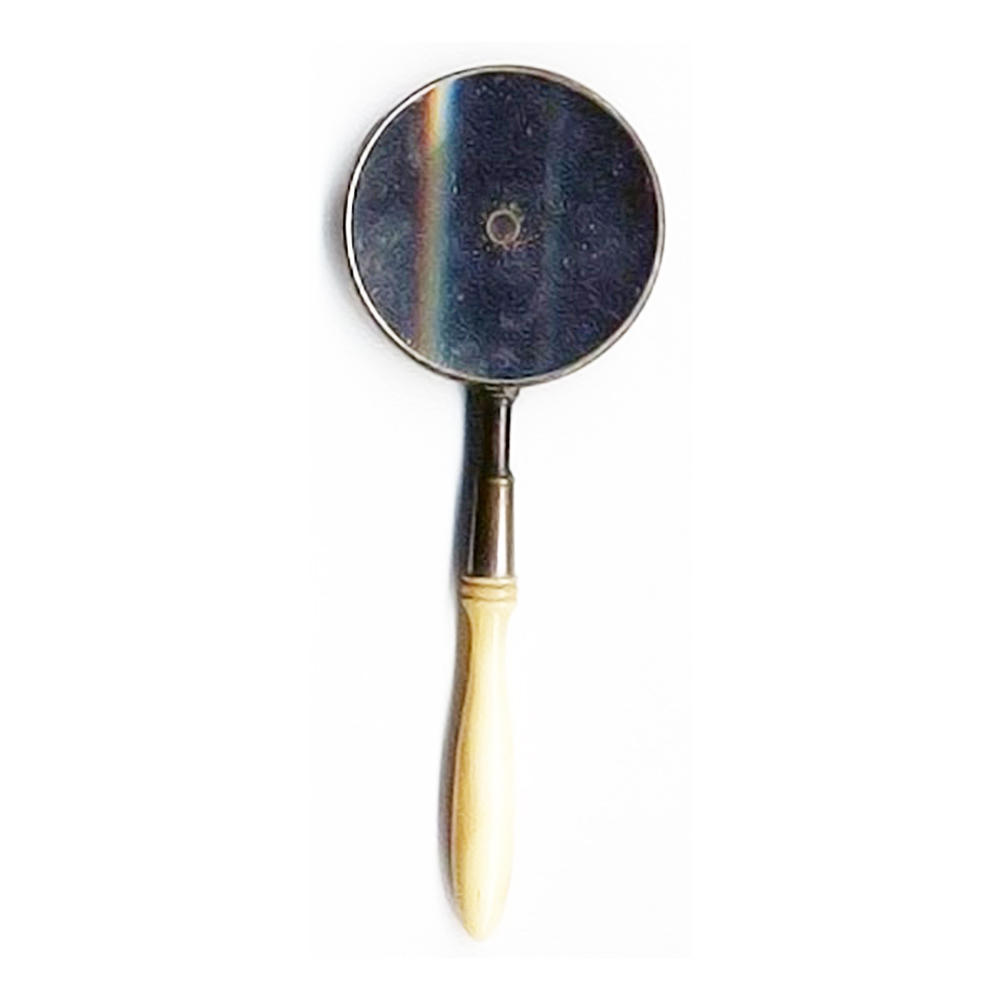
This antique Folin ophthalmoscope dates from around 1865 and represents a rare and historically important piece of French ophthalmic instrument making. Folin himself commissioned this instrument from the celebrated Parisian maker Nachet, who crafted it to Folin’s own specification. That direct connection between designer and one of Paris’s foremost scientific instrument makers places this piece firmly within the distinguished tradition of 19th century French precision optical craftsmanship.
Design and Construction
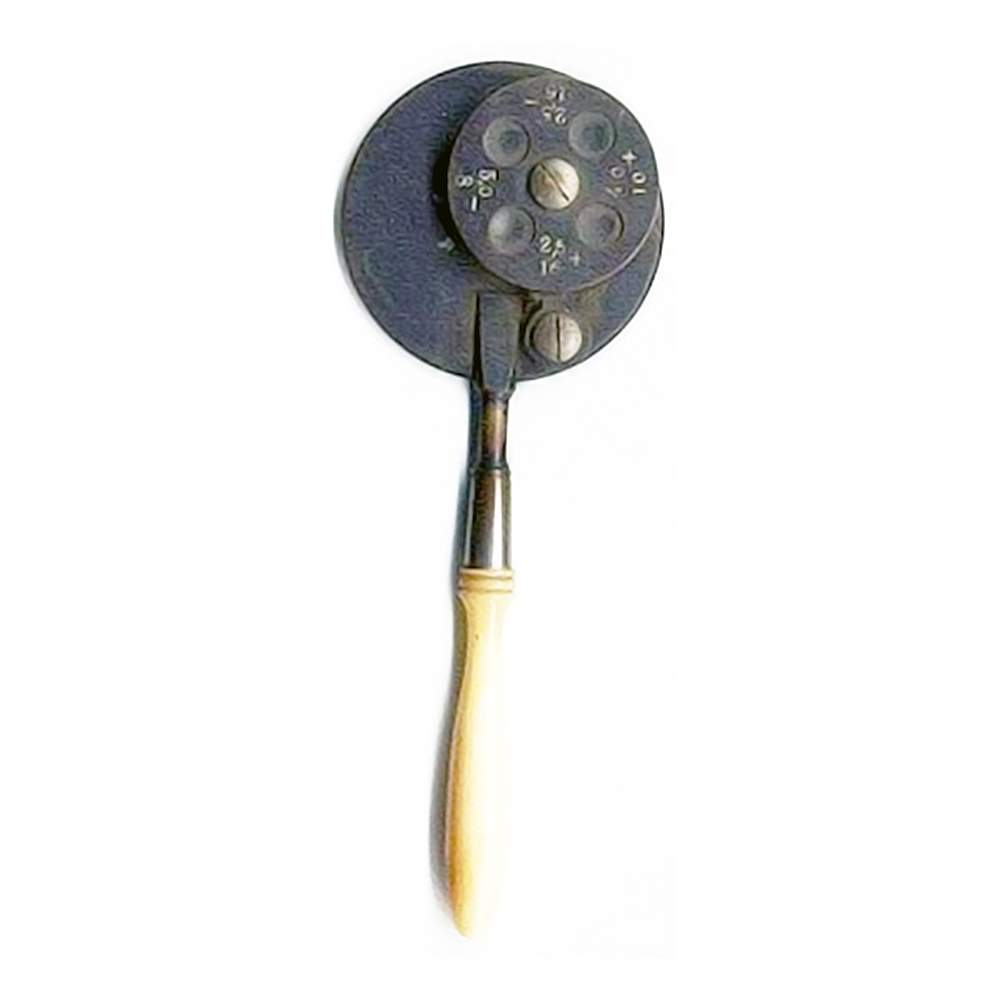
The ophthalmoscope consists of a brass frame supporting a concave glass mirror with a clear central aperture. The examiner peers through this aperture during fundus examination. The ivory handle screws directly into the frame, providing a secure and comfortable grip. On the reverse of the disc, four correcting lenses are mounted — two of minus power and two of plus. These lenses rotate in front of the disc to compensate for the refractive errors of either the examiner or the patient. This feature represented a significant functional refinement for its era, giving the clinician greater flexibility during examination.
Nachet of Paris — A Maker of the First Rank
Nachet of Paris stood among the foremost scientific instrument makers of the 19th century. The firm earned an outstanding reputation for the quality and precision of their microscopes and optical devices. Consequently, an ophthalmoscope bearing the Nachet connection carries particular prestige for collectors of antique ophthalmic instruments and French scientific instrument history alike. Browse the full antique ophthalmoscope collection to explore how Folin’s design fits within the broader story of 19th century eye examination instruments.
Historical Significance
By 1865, the ophthalmoscope had already transformed clinical ophthalmology following Helmholtz’s 1851 invention. Nevertheless, instrument makers and clinicians continued to refine the design in pursuit of greater precision and ease of use. Folin’s specification, executed by Nachet, represents one such refinement. The rotating correcting lenses in particular show a sophisticated understanding of the clinical challenges the instrument faced in everyday practice. For broader context on the development of the ophthalmoscope, the College of Optometrists’ optical history collection provides authoritative reference material.
Condition and Rarity
This is a fine and genuine example of mid-19th century ophthalmic instrument design. The brass frame, ivory handle, and rotating correcting lenses all survive intact. Together, they represent an important chapter in the development of the modern ophthalmoscope.