Antique Helmholtz Ophthalmoscope — Rekoss Königsberg | The Invention That Changed Medicine
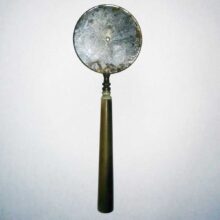
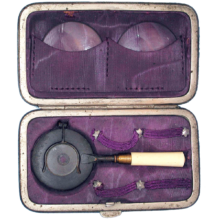
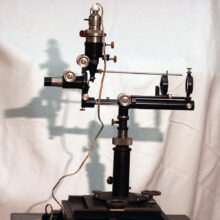
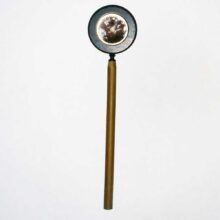
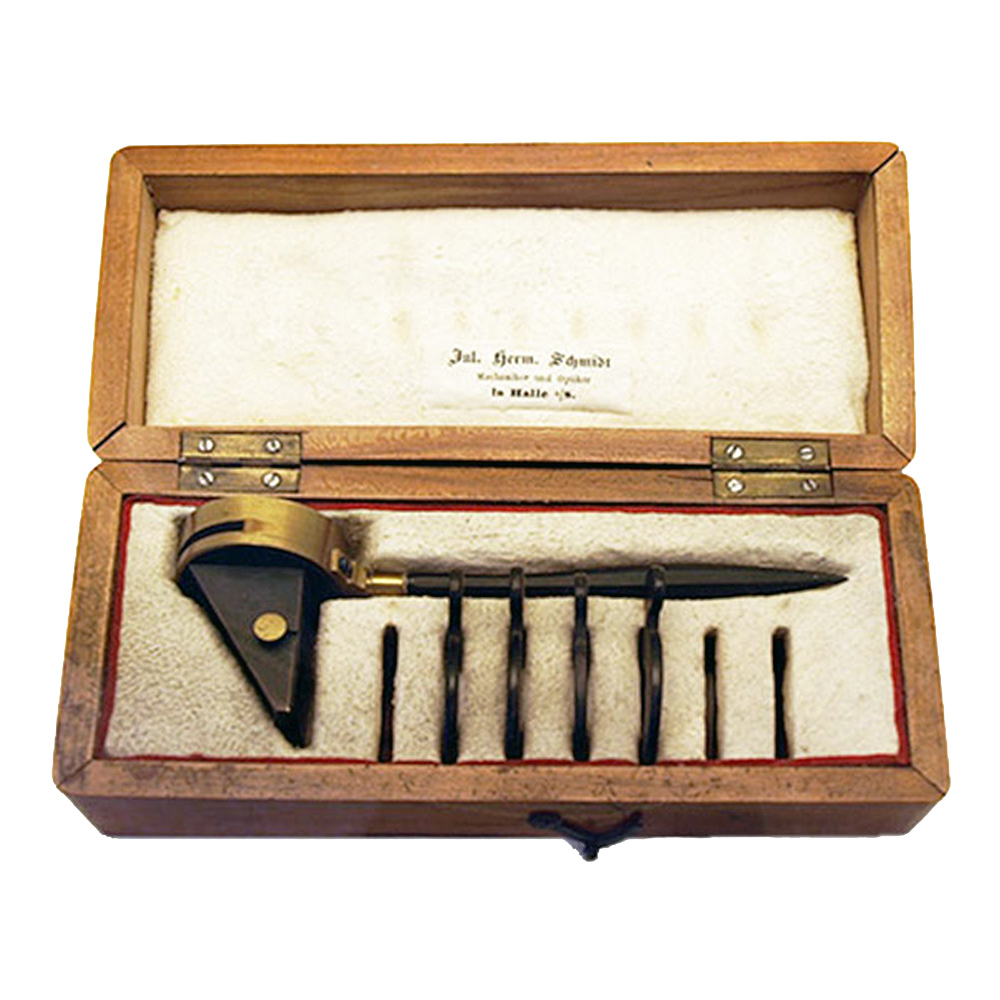
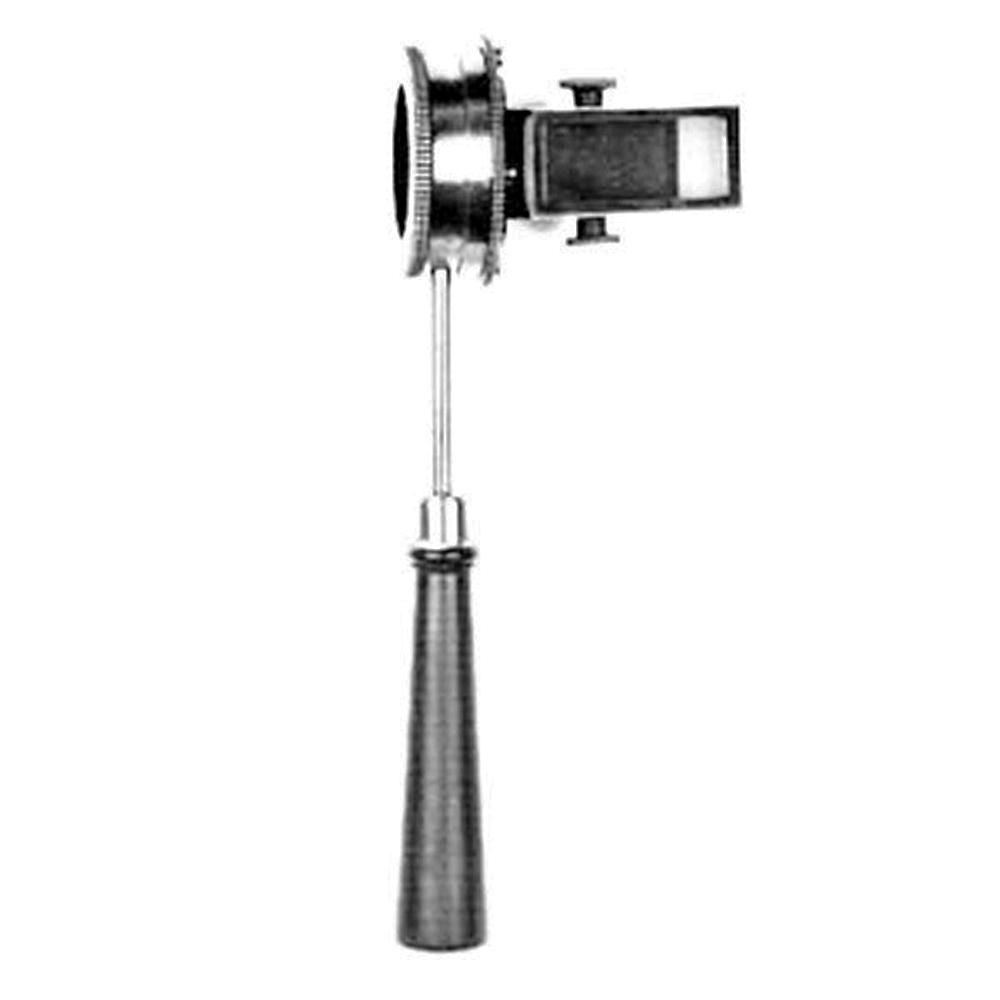
This antique Helmholtz ophthalmoscope is one of the rarest and most coveted objects in all of ophthalmic collecting. Extremely few examples survive anywhere in the world. This instrument comes presented in its original fitted wooden case — a museum-quality treasure of the first order. The above photograph was kindly taken by Gary Edwards, M.D., with permission from the curator of the Berliner Medizinhistorisches Museum der Charité in May 2010, whose specimen is one of only a handful remaining in the world.
Hermann von Helmholtz and the Invention That Changed Medicine
In 1851, Hermann von Helmholtz published his landmark article describing his ophthalmoscope. For the first time in history, a physician could look inside the living human eye and observe the retina, optic disc, and blood vessels directly. It is difficult to overstate the magnitude of this achievement. Before this invention, ophthalmology remained largely limited to examining the external eye. Afterwards, the entire nervous system became visible through a window in the eye itself. Consequently, historians widely regard the Helmholtz ophthalmoscope as one of the most important moments in the history of medicine.
Constructed by Rekoss of Königsberg
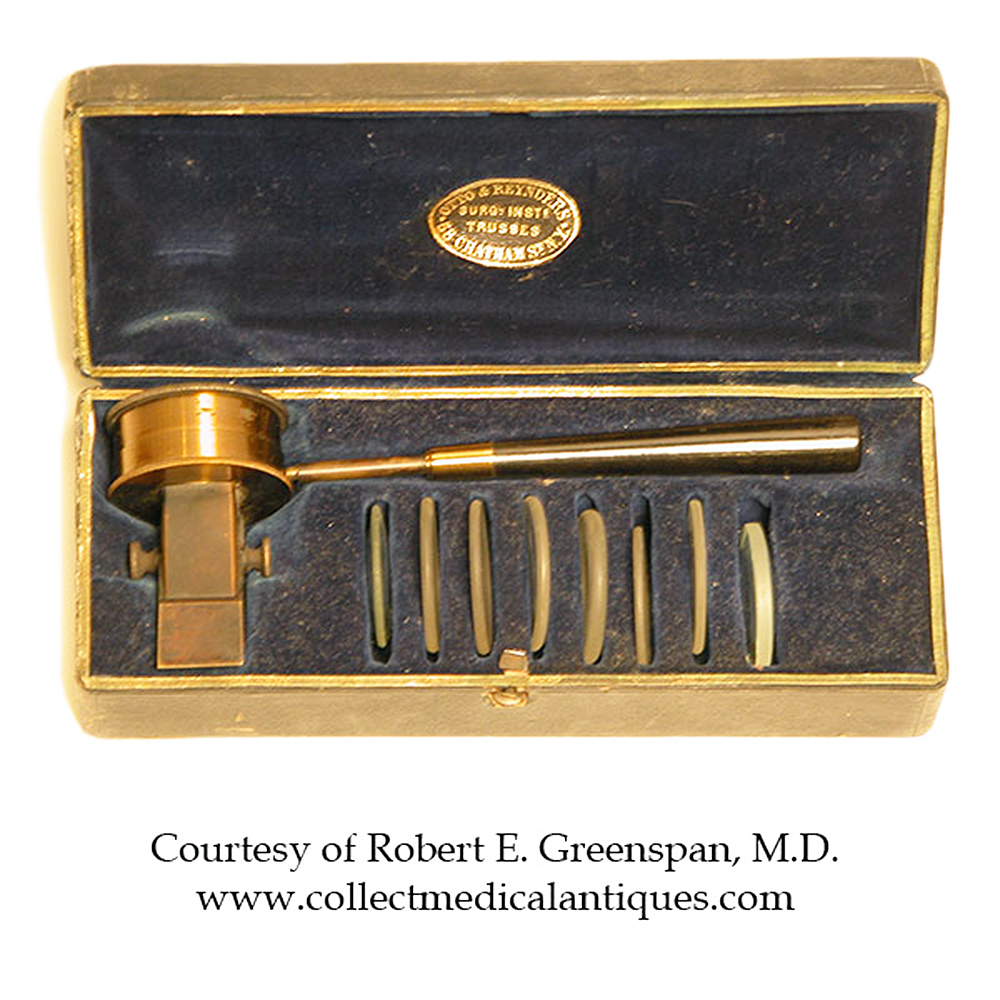
Rekoss, instrument maker at the University of Königsberg, built this instrument under Helmholtz’s direct supervision. It consists of a lens holder with a viewing hole of 3mm diameter. A frame contains three glass plates stacked on top of each other, along with seven negative correcting lenses. The glass plates attach at the polarisation angle of 56 degrees to the instrument, forming a semi-transparent mirror. That mirror deflects light from a source onto the glass plates at 56 degrees. The reflected light bundle then passes into the subject’s eye. Finally, the examiner looks through the sight hole with the beam of light into the subject’s eye — the founding principle of all ophthalmoscopy that followed. Browse the full antique ophthalmoscope collection to explore the instruments that built on this foundational design.
A Primary Historical Document
This instrument does not merely represent the history of ophthalmoscopy — it is that history. The Berliner Medizinhistorisches Museum der Charité holds one of the only other known surviving examples. That context places this piece in extraordinarily rare company. For collectors, historians, and institutions, the opportunity to acquire an original Helmholtz ophthalmoscope by Rekoss of Königsberg in its original fitted case represents a once-in-a-generation event.

The above photo was kindly allowed to be taken by Gary Edwards, M.D., by the curator of the Berliner Medizinhistorisches Museum der Charité in May 2010. The museum’s specimen is one of only a handful remaining in the world.