
Liebreich Ophthalmoscope 1870 | Patz & Flohr Berlin | Antique



Liebreich Ophthalmoscope 1870
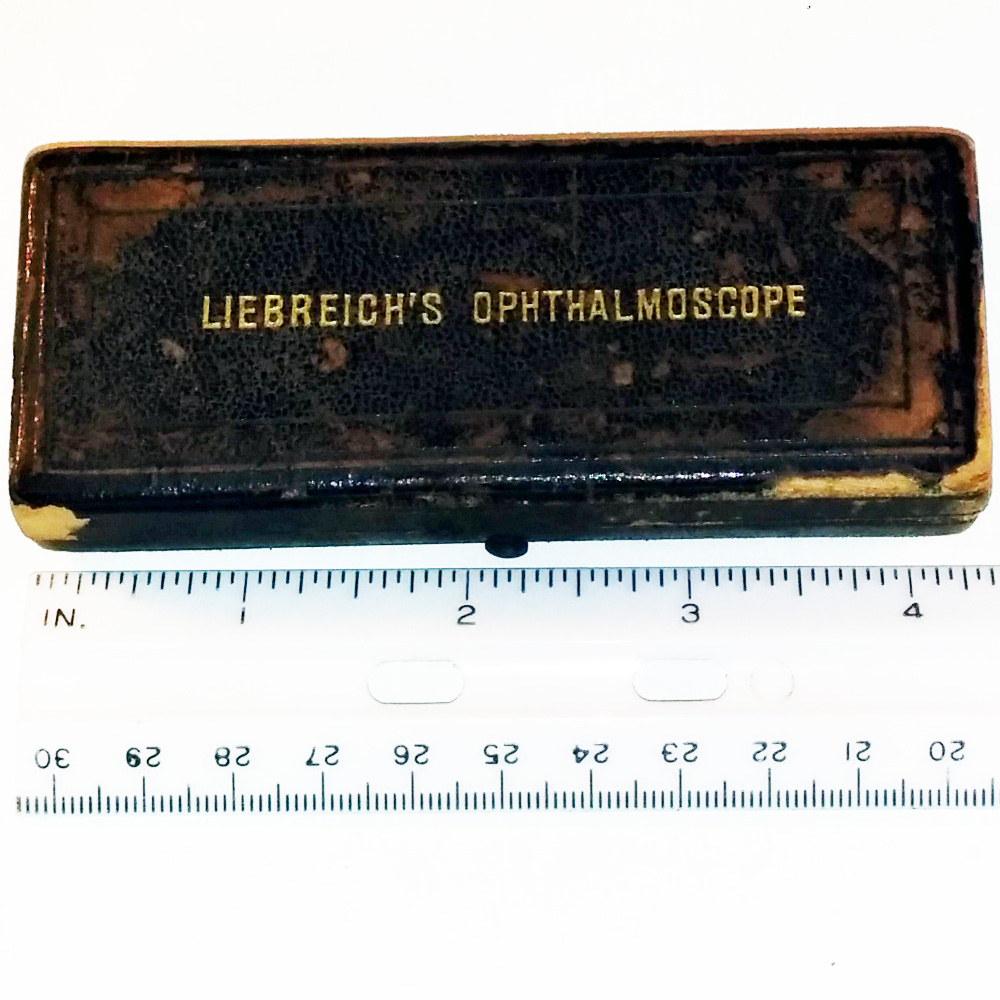
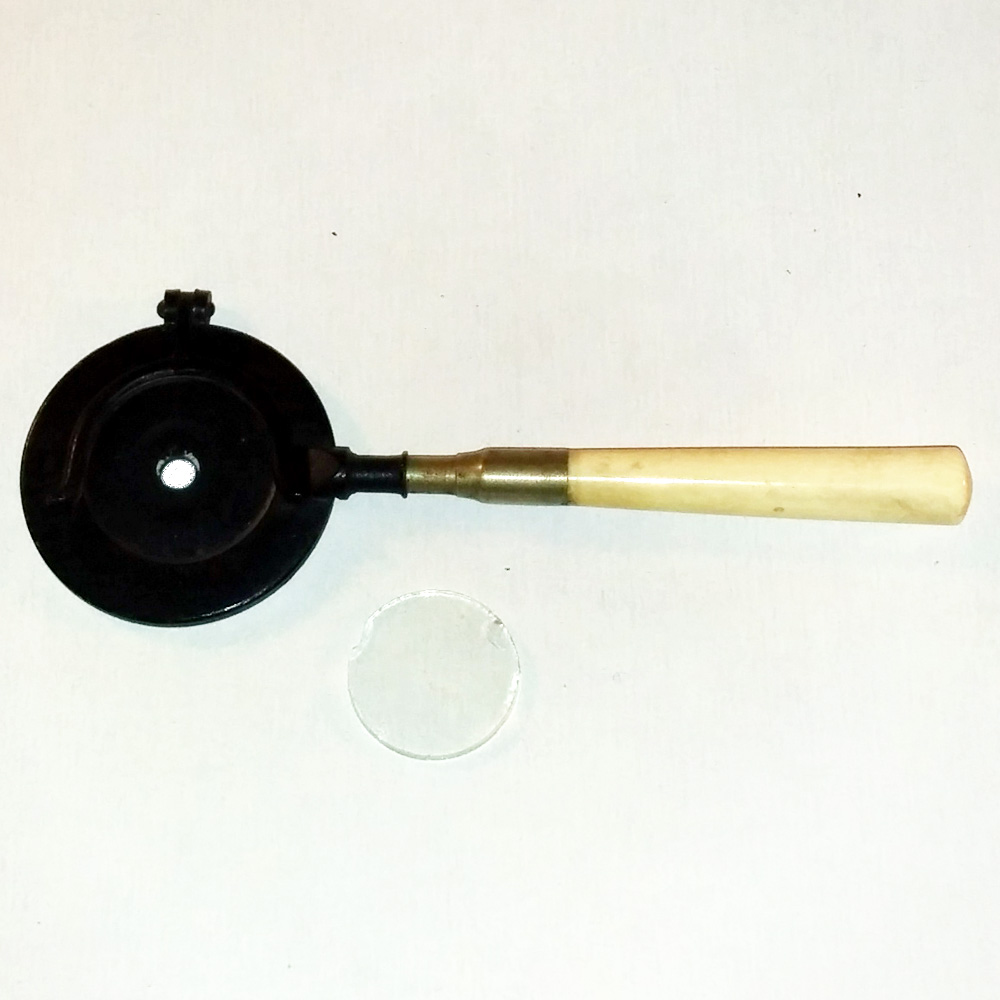
The Liebreich Ophthalmoscope is a rare and historically rich antique eye examination instrument dating to around 1870. This is an unsigned version presented in its original fitted case — just over 4 inches wide — with the lid inscribed in gold: “LIEBREICH’S OPHTHALMOSCOPE.” The case is lined in rich purple velvet. It comes with one viewing lens and one condensing lens for indirect ophthalmoscopy.
Richard Liebreich
Richard Liebreich was born in East Prussia in 1830. He studied in Berlin and received his doctorate in 1853. He was a preparator for Helmholtz — the inventor of the ophthalmoscope — in 1851. While assisting at Graefe’s clinic from 1854 to 1862, Liebreich published a classic treatise about ophthalmoscopy in the French edition of Mackenzie’s book. In 1862 he settled in Paris and published his famous atlas of ophthalmoscopy. In 1870 he moved to London and directed the ophthalmic section at St. Thomas’ Hospital from 1871 to 1878. He later moved back to Paris where he died in 1917.
The Liebreich Design
Liebreich first described his stand ophthalmoscope in 1855. It featured two short brass tubes adjusted by a screw thread. The tube near the observer had a section with a metal concave mirror held by two double springs. This mirror was rotatable around the vertical axis and could be removed. The other tube held a convex lens on the side near the patient. It also rotated around the vertical axis and could be removed. A small button at the end of a linked rod served as a fixation target. The image in the tub could be projected onto the table top with a camera lucida. A cushioned forehead and chin rest were also included.
The Anagnostakis Connection
Liebreich soon saw Graefe’s clinic colleague Anagnostakis from Greece training with Graefe from 1851 to 1854. Anagnostakis came up with the idea of making the instrument hand-held with a concave mirror. Liebreich embraced this and sketched the model he preferred in his treatise about ophthalmoscopy in 1857.
Dating This Example
In 1861 Hulke described both the small and large Liebreich instruments. The hand-held version began around 1860 and lasted almost 50 years. In the early 1870s the metal mirror was replaced by glass free of coating in the center. If a Liebreich ophthalmoscope has a glass mirror, it dates from the 1870s or later. This example dates from that period. It was made by Patz and Flohr, opticians in Berlin.
See our Liebreich Military Ophthalmoscopes.