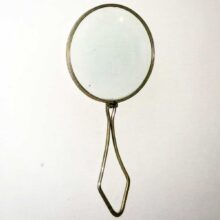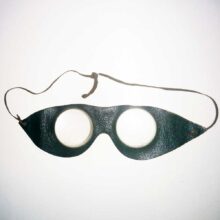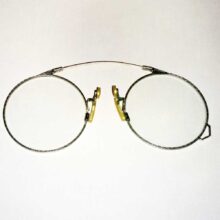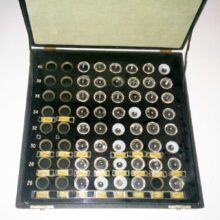


Antique Chinese eyewear occupies a unique place in the history of spectacles — unlike Western eyeglasses which were primarily functional vision correction devices, traditional Chinese eyeglasses were worn as symbols of status, wisdom, and scholarly achievement. The lenses carried no refractive power whatsoever, serving purely as a social accessory meant to impress observers with the intelligence and elevated standing of the wearer.
Spectacles first arrived in China via trade routes from Europe in the 15th and 16th centuries, and were quickly adopted by the Chinese scholarly class as prestigious objects. The distinctive design features seen in this example — the large round frames, the ornate bridge and temple connections with decorative elements, and the weighted ear loops designed to drape over the ears rather than grip them — are characteristic of Chinese spectacle making traditions that developed independently from European styles over several centuries.
The combination of brass frame construction with clear non-prescription lenses reflects the purely ceremonial purpose of these spectacles. Today antique Chinese eyewear is highly sought after by collectors of both ophthalmic antiques and Asian decorative arts, representing a fascinating intersection of Eastern and Western cultural history. This example, with its delicate round lenses and characteristic weighted temples, is a beautiful specimen of this remarkable tradition.