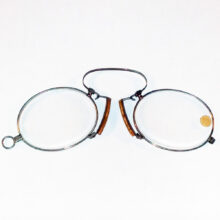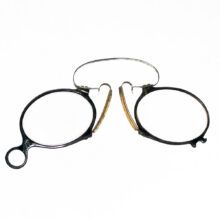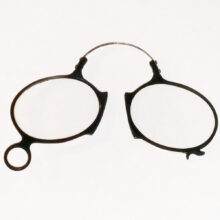

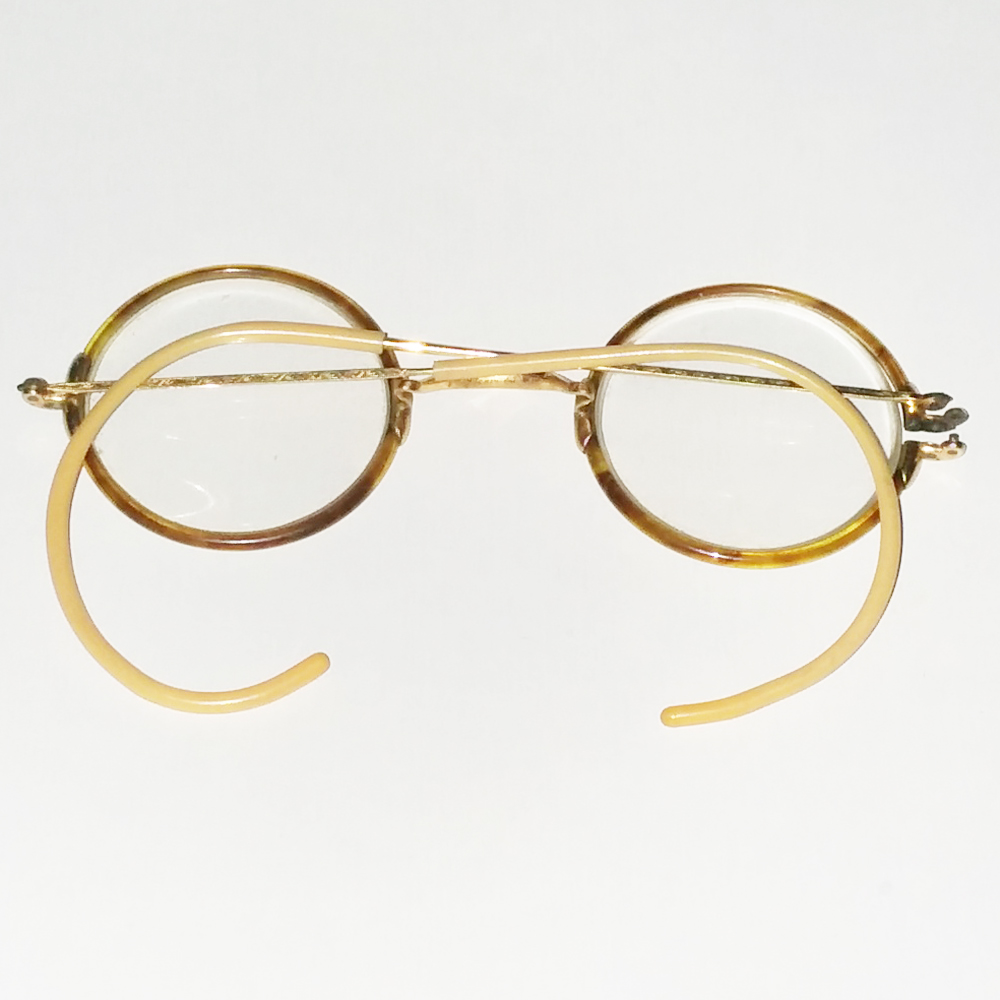

The Arco Ful-Vue Windsor style spectacles of 1928 represent a defining moment in the history of eyewear design — the transition from the purely functional optical instrument of the Victorian era to the fashion-conscious accessory of the modern age. The Windsor frame, characterized by its perfectly round lenses and delicate cable temples that curl around the ear, was one of the most popular spectacle styles of the 1920s and remains one of the most recognizable and beloved vintage eyewear designs today.
This example is crafted in tortoiseshell celluloid — one of the first synthetic plastic materials used in spectacle frame manufacture, introduced in the early twentieth century as a more affordable and durable alternative to genuine tortoiseshell. The warm amber and brown mottled tones of the celluloid closely mimic natural tortoiseshell, giving the frames a rich, organic appearance that perfectly complemented the Art Deco aesthetic of the late 1920s. The “Ful-Vue” designation refers to the frame’s design feature of positioning the lens slightly higher in the frame to maximize the wearer’s upward field of vision — an innovation that became extremely popular in this era.
The Arco brand was one of several American optical companies producing quality spectacle frames in the 1920s, competing with European manufacturers for the growing consumer eyewear market. A pair of Windsor style spectacles in this condition, retaining their original tortoiseshell celluloid finish and cable temples, is a wonderful example of Jazz Age eyewear at its most elegant.