
Beebe Binocular Loupe 1890-1910 | Antique Magnifying Spectacles Pre-Patent


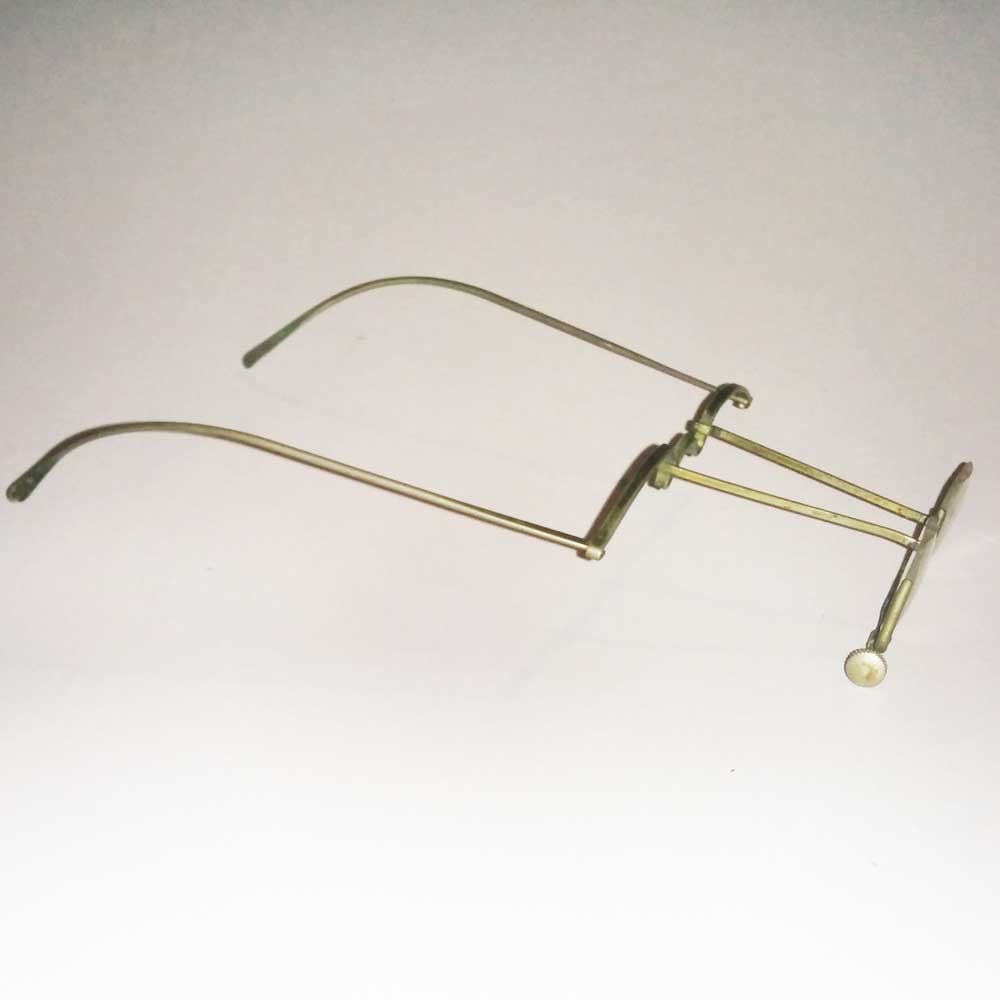


The Beebe Binocular Loupe, dating to approximately 1890 to 1910, is a fascinating and historically complex instrument that predates — and may have directly inspired — the formal Beebe loupe patent filed in 1912. This type of binocular magnifying spectacle was designed to provide hands-free magnification for close work such as watchmaking, surgery, jewelry examination, and fine needlework, freeing both hands for the task while maintaining comfortable binocular vision.
This example uses a design similar to the patented Beebe loupe but with several distinctive features suggesting earlier manufacture. The temples and nose bridge construction tend to label it as prior art from the late 1800s, predating the cable temples — those distinctive curved ear hooks — that American Optical introduced around the time of Beebe’s 1914 production run. Notably, the lenses in this specimen are inserted vertically rather than horizontally as shown in the patent illustration, another indicator of its pre-patent origin. The adjustable pupillary distance screw mechanism allows the inter-lens spacing to be customized to the individual user’s eyes — a sophisticated feature for an instrument of this age.
The lenses are spherical with a focal point of 5 inches (12.5 cm), giving them a power of 8 diopters and approximately 3X magnification. Remarkably, by adjusting the pupillary distance using the screw mechanism, these loupes can still be used today for very close tasks such as coin or stamp collecting — a testament to the enduring quality of their optical construction over a century after manufacture.