

Here are the complete SEO packages for Group 1 — Horn Rim Pince-Nez with Cork Nose Pads 1875:
Antique Horn Rim Pince-Nez with Cork Nose Pads 1875
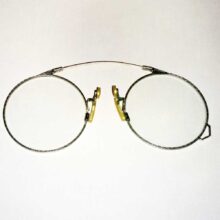
These antique horn rim pince-nez with cork nose pads are genuine unsold old stock from 1875. They have never been worn in approximately 150 years. Each pair survives in remarkable condition for their age.
The frames feature bold oval horn rims in a rich variegated translucent brown. Horn was prized for its warm organic beauty and light weight. No synthetic material has ever replicated it convincingly. The steel spring mechanism and original cork nose pads remain intact. Cork nose pads are an exceptionally rare survival on frames of this age.
Patent Markings and Dating
Each frame is signed “PAT AUG 75” — confirming an August 1875 patent date. A diamond hallmark with a cross inside also appears on the frame. The number stamped on each pair indicates the focal length in inches. This was the standard way opticians specified lens power before diopters came into common use.
Available Powers
These horn rim pince-nez with cork nose pads are available in two reading powers:
- +1.00 diopter — equivalent to a 40-inch focal length. Ideal for early presbyopia or mild near vision difficulty.
- +1.25 diopters — equivalent to a 32-inch focal length. Suits a typical person in their mid-forties needing gentle reading support.
An optician can replace the original lenses with any prescription if desired.
The Pince-Nez Style
The pince-nez — French for “pinch the nose” — clips directly onto the nose without temples or ear pieces. This style was enormously fashionable from the 1860s through the early 1900s. Statesmen, scholars, and society figures wore them on both sides of the Atlantic. These frames are lightweight and wearable as well as highly collectible.
Condition
Both pairs show only the mildest age-related oxidation on the steel spring. The horn rims, cork pads, and lenses are all in excellent condition. These are extraordinarily well-preserved examples of Victorian optical craftsmanship.