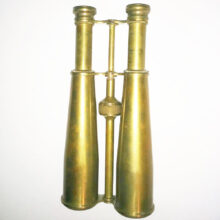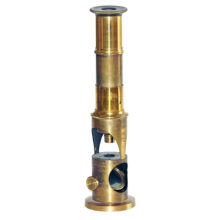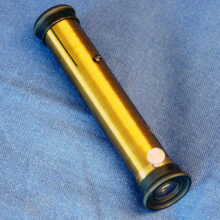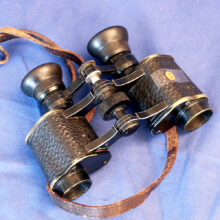

This antique brass and leather telescope represents one of the most enduring and elegant optical instrument designs in history — the single-draw hand telescope that served navigators, military officers, naturalists, and gentlemen observers for over three centuries. The combination of polished brass fittings and leather-wrapped barrel is characteristic of quality telescope construction from the 18th through early 20th centuries, with the leather providing both grip and insulation against the cold metal in outdoor conditions.
Single-draw telescopes of this type were produced by optical makers throughout Europe and America in enormous variety, ranging from inexpensive pocket instruments to finely crafted presentation pieces. The brass and leather combination seen here places this example in the middle to upper range of quality — a working instrument of genuine optical merit rather than a decorative piece, built to withstand the rigors of field use while remaining comfortable to handle. The draw tube mechanism, which extends to increase the instrument’s focal length for focusing, is the defining feature of this classic design and represents centuries of refinement in portable telescope construction.
While not strictly an ophthalmic instrument, the telescope occupies an important place in the history of optical science — the same principles of lens grinding and optical alignment that produced the telescope in the early 17th century directly informed the development of the spectacle lens, the microscope, and ultimately the ophthalmoscope. Collectors of ophthalmic and optical antiques frequently include fine telescopes in their collections as representatives of the broader optical tradition from which eye care instruments emerged.