
Large Hard Contact Lenses 1950s | Antique Scleral Lens Pair
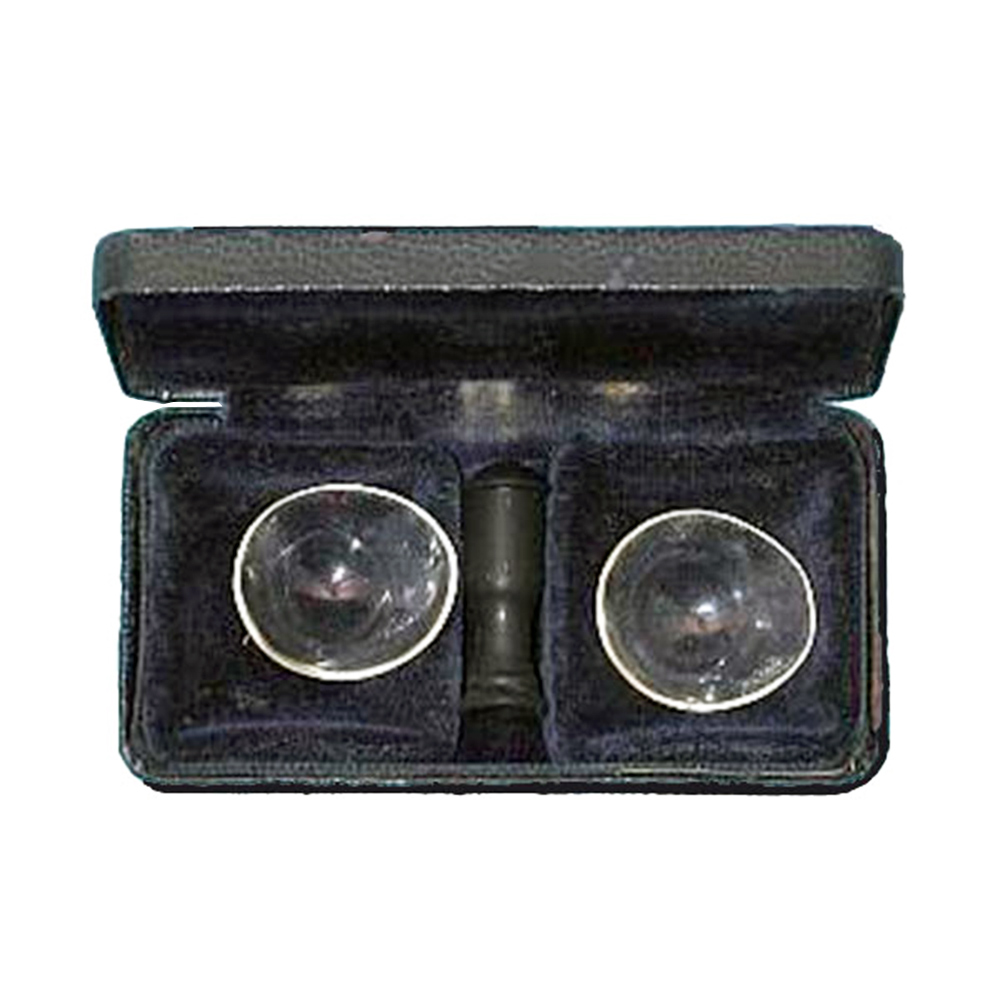
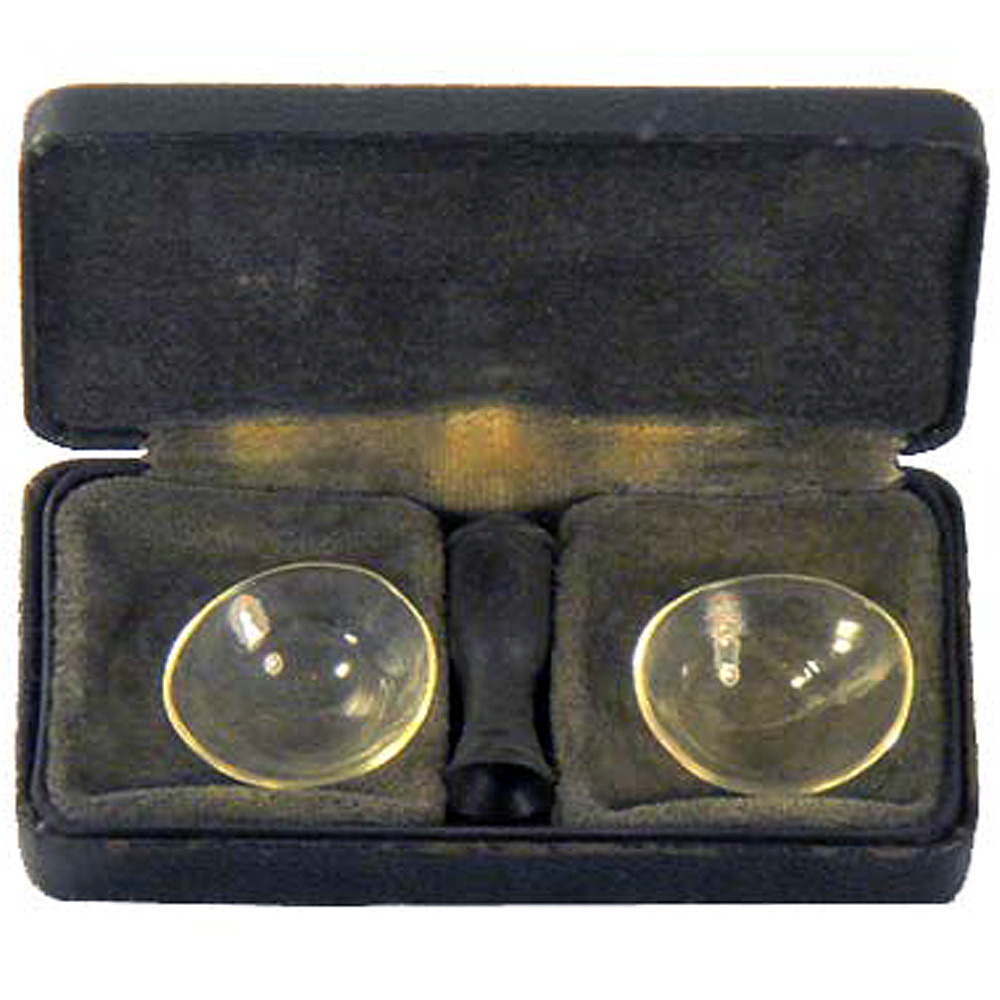
Large Hard Contact Lenses from the 1950s
These large hard contact lenses 1950s are a remarkable and rare survival from the earliest era of contact lens wear. They rest in their original fitted case with black velvet lining. This type of lens represents a critical and often overlooked chapter in the history of vision correction. Furthermore, very few pairs survive in this condition today.
What Made These Lenses Different
Before the modern corneal contact lens, hard lenses completely covered the cornea and extended onto the sclera. The sclera is the white of the eye. Consequently, these lenses became known as scleral lenses. They were very uncomfortable to wear. They also severely limited the supply of oxygen to the cornea. As a result, patients could typically tolerate them for only a few hours at a time. The history of contact lens development places these early scleral lenses at the very beginning of a revolution in vision correction.
How Patients Removed Them
Because of their large size, patients could not remove these lenses with a fingertip. Modern contact lenses come off easily this way. However, these early lenses required a different approach entirely. A small rubber suction cup was pressed against the lens surface. This created gentle suction between the lens and the eye. The suction broke the seal and allowed the lens to lift away safely.
The Transition to Modern Contact Lenses
Smaller corneal contact lenses arrived in the late 1950s and 1960s. They transformed contact lens wear almost overnight. These newer lenses covered only the cornea. They also allowed far greater oxygen transmission and permitted much longer wearing periods. Consequently, the large scleral lenses shown here quickly became obsolete. Their rarity today reflects how thoroughly and swiftly they were replaced.
A Striking Collector’s Piece
These large hard contact lenses appeal to a wide range of collectors. Antique optical collectors, optometrists with an interest in contact lens history, and anyone fascinated by early vision correction technology will find them compelling. Explore our broader collection of antique ophthalmic objects to discover more rare artifacts from the history of eye care.