
Holmes Stereoscope with Cards | Victorian 3D Viewer
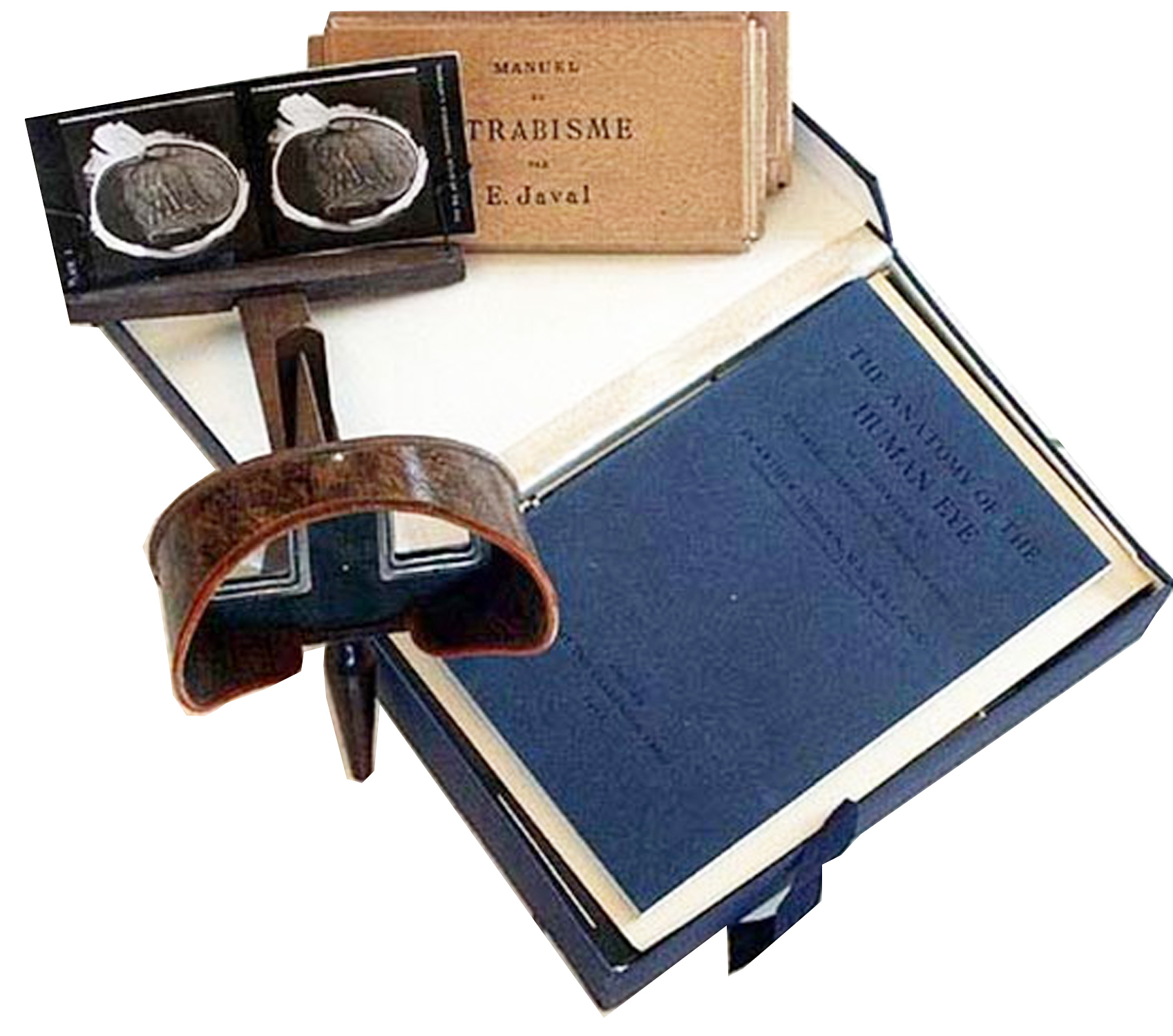
Holmes Stereoscope with Cards — Victorian 3D Eye Study Viewer
This antique Holmes stereoscope with cards is one of the most iconic optical instruments of the Victorian era. Oliver Wendell Holmes designed this viewer in 1861. His open, hand-held format became the standard stereoscope design worldwide. This example features the characteristic wooden handle and twin lenses. The original card collection accompanies the viewer — making this a complete and displayable set of genuine historical importance.
How the Holmes Stereoscope Works
The Holmes stereoscope views two slightly offset photographs simultaneously. Each eye sees one image. The brain merges those two images into a single three-dimensional picture. This process mimics natural binocular vision with remarkable fidelity. The result is a depth and solidity that no flat illustration can replicate. Victorian audiences found the effect astonishing, and the stereoscope became one of the most popular optical entertainments of the 19th century.
Medical and Educational Use
This particular set served a specialized and serious purpose. The stereoscopic cards focus on eye anatomy in three dimensions. Students and clinicians used sets like this to build spatial understanding of ocular structures that flat textbook illustrations simply could not convey. A cross-section of the eye rendered in stereo gave the viewer an immediate, intuitive grasp of depth relationships within the orbit. For more unusual ophthalmic objects from the same era, browse the antique ophthalmic objects museum collection at Eye Antiques.
Oliver Wendell Holmes and His Legacy
Holmes was a physician, poet, and professor at Harvard Medical School. He designed his stereoscope with deliberate simplicity. The open frame, wooden handle, and sliding card holder made the viewer cheap to produce and easy to use. He famously declined to patent the design, ensuring it spread freely. That decision transformed the stereoscope from a parlor curiosity into a global phenomenon. Holmes stereoscopes reached drawing rooms, classrooms, and medical schools across the world within years of his 1861 design. The full scope of stereoscope history is documented in the Science Museum Group’s stereoscope collection.
Construction and Condition
The wooden handle and frame show the warm patina of honest age. The twin lenses remain clear and functional. The original card collection provides direct context for the viewer’s medical and educational use. Together, viewer and cards form a cohesive and historically eloquent set.