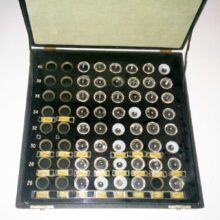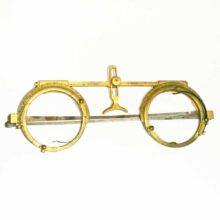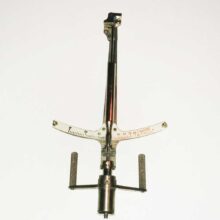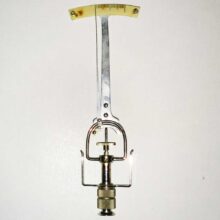
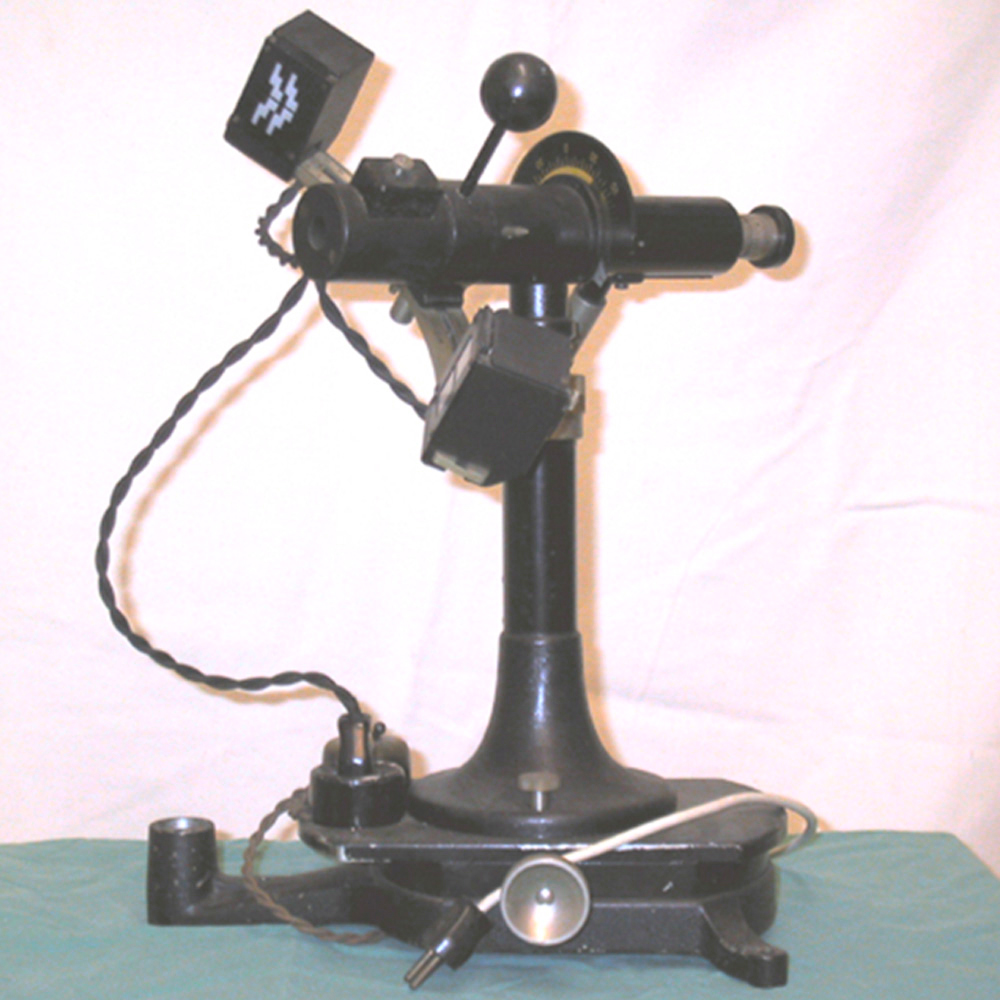
Javal-Schiotz Keratometer 1950
The Javal-Schiotz keratometer is one of the two great classic designs in the history of corneal measurement. This antique example dates from around 1950 and represents a fine survival of a once-standard clinical instrument. It is in good condition with one noted exception described below.
Two Types of Keratometer
There are two principal types of keratometer — the Javal-Schiotz and the Helmholtz type. Most ophthalmologists today are more familiar with the Helmholtz design. The two instruments differ fundamentally in their method of measurement. Each has its advocates and its own distinguished history in clinical practice.
How the Javal-Schiotz Works
The Javal-Schiotz keratometer uses an adjustable object size to measure corneal curvature. It then requires alignment of a red square and green staircase design projected onto the cornea. The examiner adjusts the separation of the mires until the two target images align correctly. This gives a precise measurement of corneal radius and the degree of astigmatism present.
Keratometers measure the corneal shape both quantitatively and qualitatively. They are essential for diagnosing corneal astigmatism, fitting contact lenses, and calculating intraocular lens power before cataract surgery.
Condition
This Javal-Schiotz keratometer is missing the patient support stand. This would have protruded upward from the empty hole visible on the left side of the instrument base. All other components appear intact. The instrument retains its original black finish and brass fittings in good condition for its age.
Collectibility
The Javal-Schiotz keratometer is a striking and architecturally elegant instrument. Its distinctive arm and mire assembly make it an impressive display piece. Examples from the mid-20th century are increasingly difficult to find in any condition.