
Johnston Optometer 1882 | George Johnston Detroit
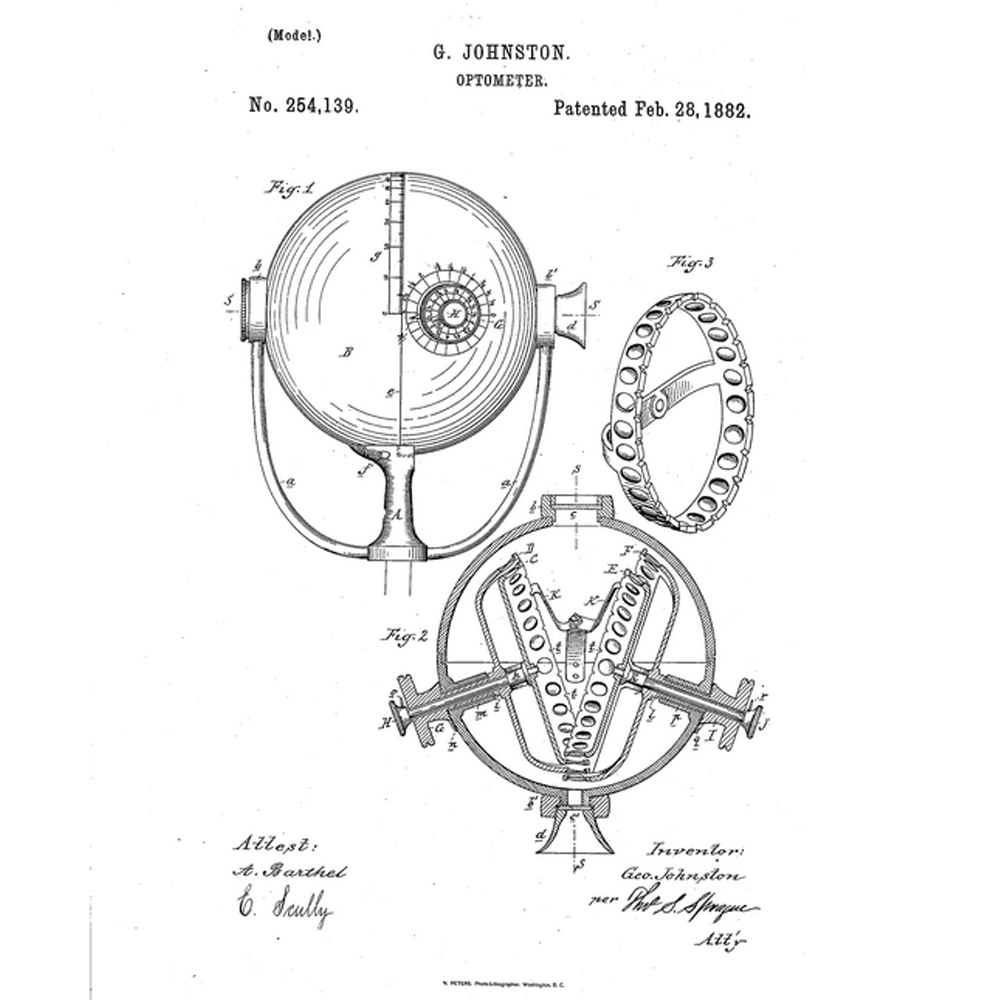
Johnston Optometer 1882
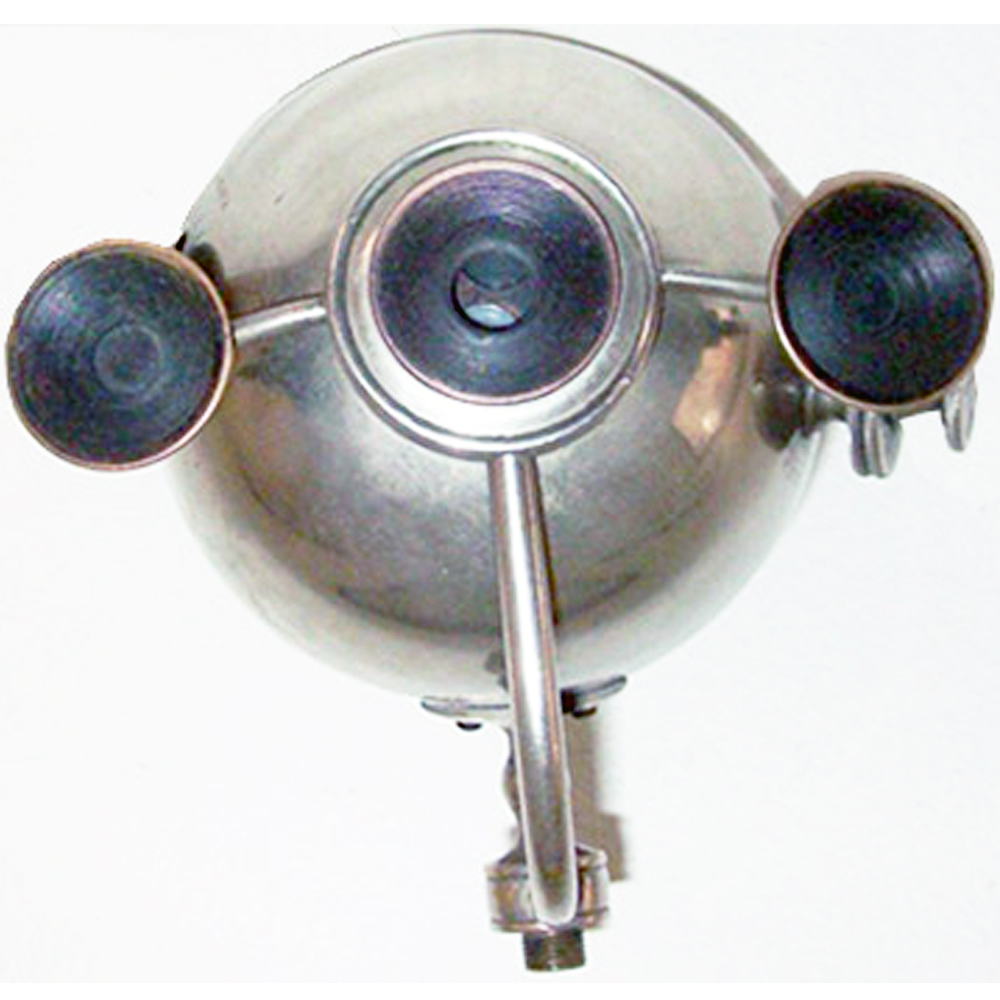
The Johnston Optometer ranks among the rarest instruments in the history of optometry. Someone rescued this example from an abandoned house. Only the sharp eye of its current owner saved it from the junk pile forever. It carries a signature and a date, making it a precisely documented piece of American optical history.
The Inventor and Patent
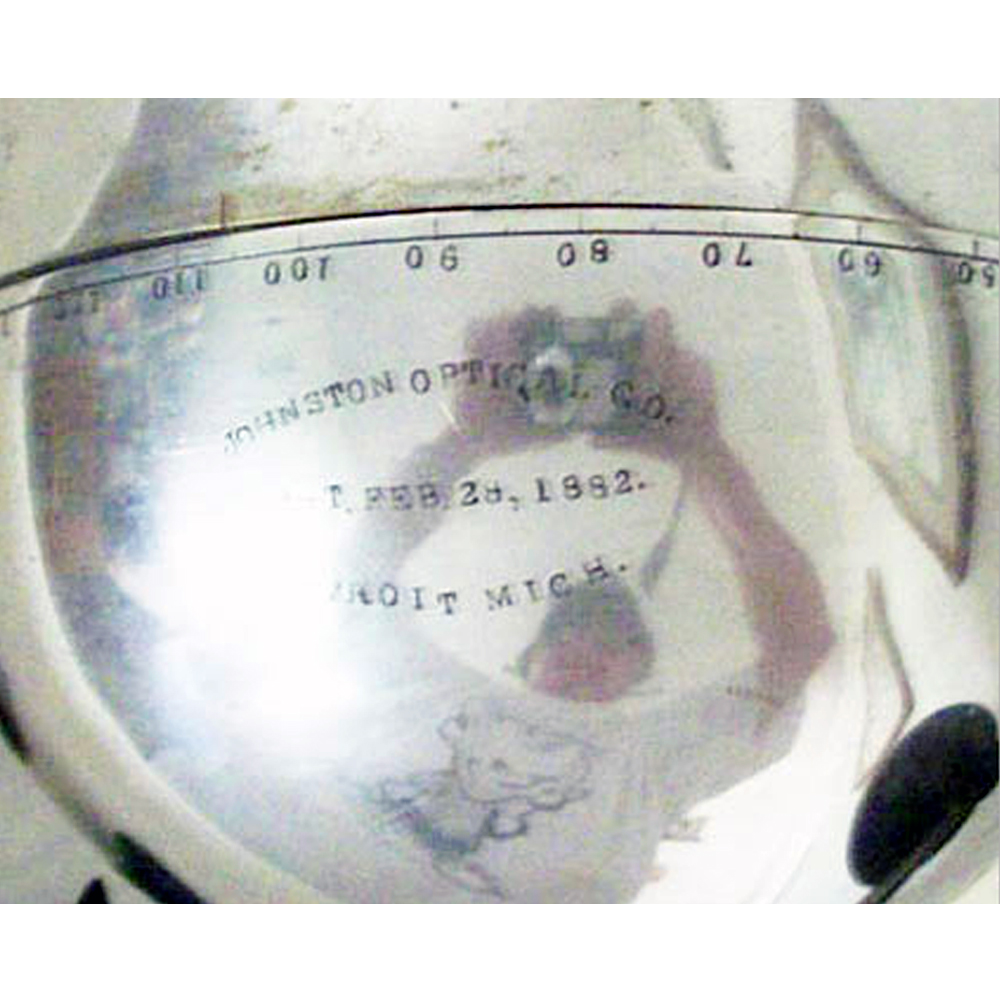
George Johnston of Detroit, Michigan invented this optometer. He received US Letters Patent No. 254,139 on February 28, 1882. He had filed the application on September 19, 1881. The instrument itself carries three markings:
- JOHNSTON OPTICAL CO.
- PAT. Feb 28, 1882
- DETROIT MICH.
What the Optometer Does
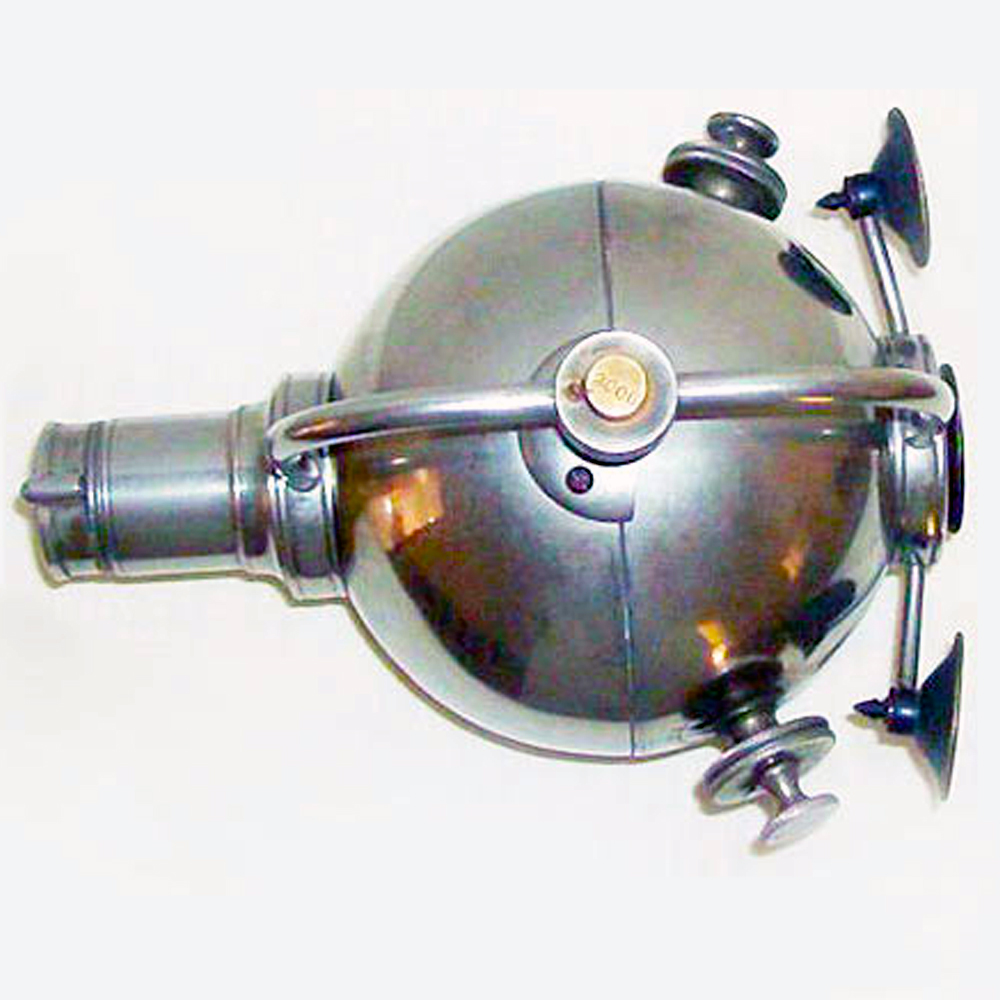
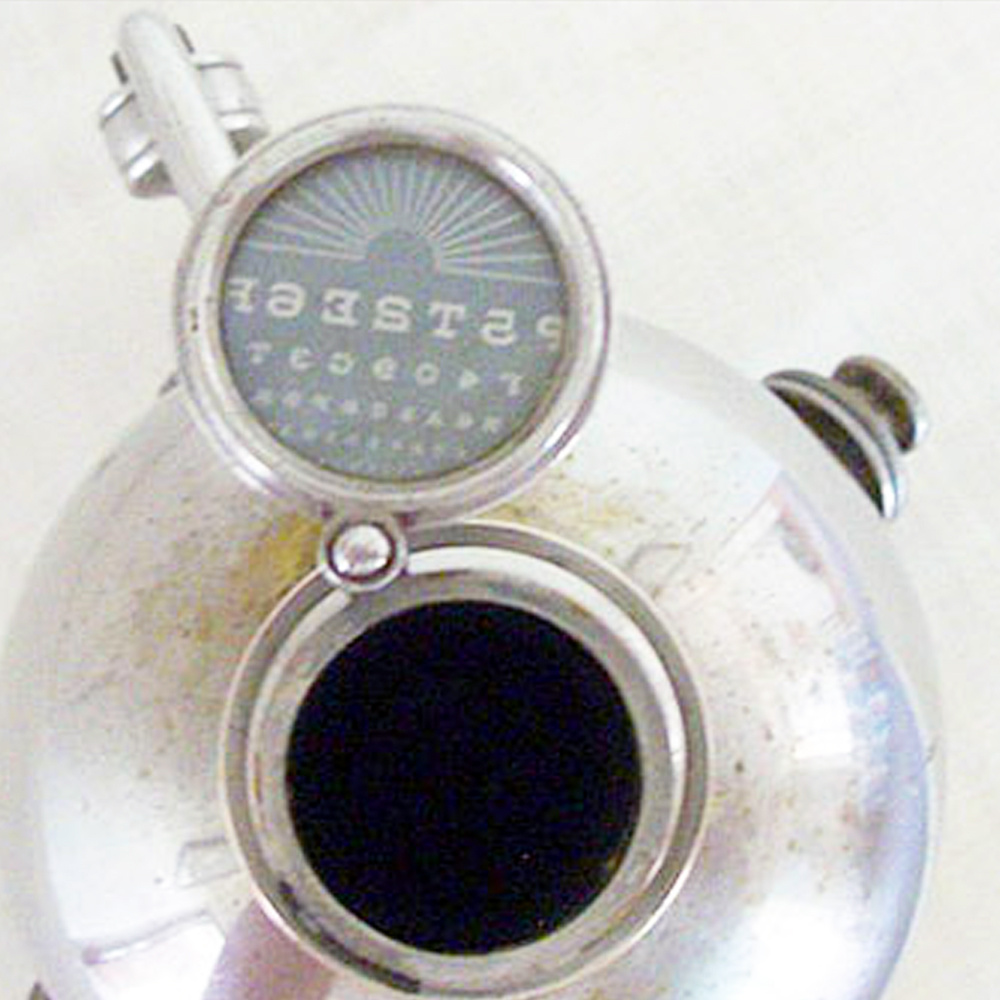
The Johnston optometer measured refractive error, essentially the strength of eyeglasses a patient needed. The patient viewed an object through the eyepiece. Meanwhile, the examiner rotated the dials until the image appeared most clear. That dial position then indicated the prescription.
Johnston’s key innovation involved testing for astigmatism alongside short and farsightedness. Before his instrument, opticians needed a separate set of cylindrical lenses and a slow, tedious process to test for astigmatism. However, Johnston’s design combined both tests into one easy, accurate procedure. As a result, practitioners could also determine the angle of astigmatism mathematically.
Mechanical Design
The instrument uses four sets of revolving lens discs. Each disc carries a full set of test lenses at different focal powers. The discs mount on shafts set at angles to each other. Meanwhile, a hollow half-globe allows light to pass centrally through the instrument. The operator rotates each shaft independently using hand wheels and index fingers. Additionally, a spring-pawl system prevents accidental lens displacement. Each disc also contains one blank opening, so the wearer experiences clear vision whenever that set isn’t needed.
A Known Limitation
Accommodation, the eye’s natural ability to self-focus, could interfere with measurements. Every optometer of the era faced this same recognized challenge. Despite this limitation, the Johnston optometer represented a serious and elegant attempt to objectify the refraction process in 1882.
Rarity and Collectibility
Very few Johnston optometers ever appear for sale today. Consequently, this example makes a highly prized collectible for anyone interested in early American optometry and ophthalmology history. Collectors may also want to browse our eye exam equipment collection for related instruments from the same era.