

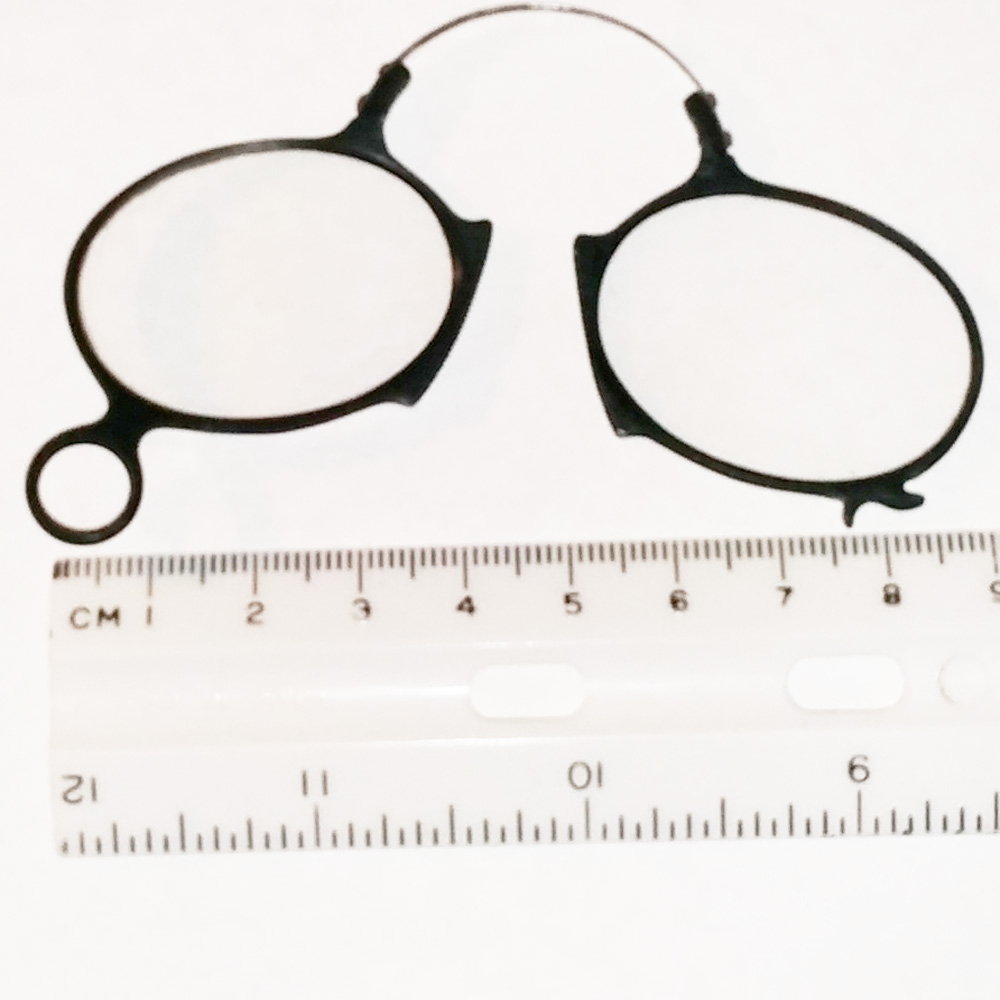

Antique Ebonite Pince-Nez 1860s
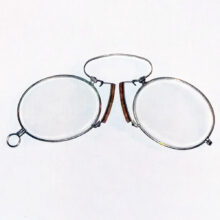
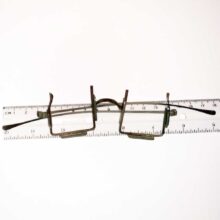
These antique ebonite pince-nez date from the 1860s and represent a classic style of Victorian nose-clip eyewear. Each pair features sturdy ebonite rims with a characteristic black finish. Ebonite — a hard vulcanized rubber — was widely used for spectacle frames throughout the second half of the 19th century. It was lightweight, durable, and comfortable against the skin. John J. Bausch first used ebonite for spectacle frames in 1864 in Rochester, New York. So this hard rubber pince nez represents one of the first ebonite frames in the world.
The frames feature the distinctive spring-clip nose bridge typical of the period. This holds the pince-nez firmly on the nose without temples or ear pieces. The overall construction is robust and the frames have survived remarkably well for their age.
About Ebonite Frames
Ebonite was one of the first synthetic-like materials used in eyewear manufacture. Charles Goodyear developed vulcanized rubber in the 1840s. Hard rubber — or ebonite — quickly found applications in optical frames. It offered advantages over horn and tortoiseshell in consistency and workability. Many fine pince-nez and spectacle frames of the 1860s through 1890s used ebonite extensively.
Available Powers
These antique ebonite pince-nez are available in six reading powers to suit a wide range of wearers:
- +1.75 diopters — mild reading power for early presbyopia
- +2.00 diopters — a common reading strength for those in their mid-forties
- +2.50 diopters — moderate reading power for advancing presbyopia
- +2.75 diopters — stronger reading support for those in their fifties
- +5.50 diopters — high power for significant farsightedness or very close detailed work
- +8.00 diopters — very high power, suited to advanced farsightedness or low vision tasks
An optician can replace any of the original lenses with a custom prescription if preferred.
Wearability and Collectibility
These ebonite pince-nez are wearable as well as collectible. The pince-nez style enjoyed enormous popularity from the 1860s through the early 1900s. Politicians, writers, and professionals across Europe and America wore them daily. Today they appeal to collectors, costume designers, and anyone who appreciates genuinely historic eyewear.
Condition
Each pair shows age-appropriate wear consistent with frames of 160 years. The ebonite retains its deep black color. The spring mechanisms remain functional. These are fine and authentic survivors of mid-Victorian optical craftsmanship.