
Oldham Ophthalmoscope | Antique Victorian Eye Tool
Oldham Ophthalmoscope — Antique Eye Instrument
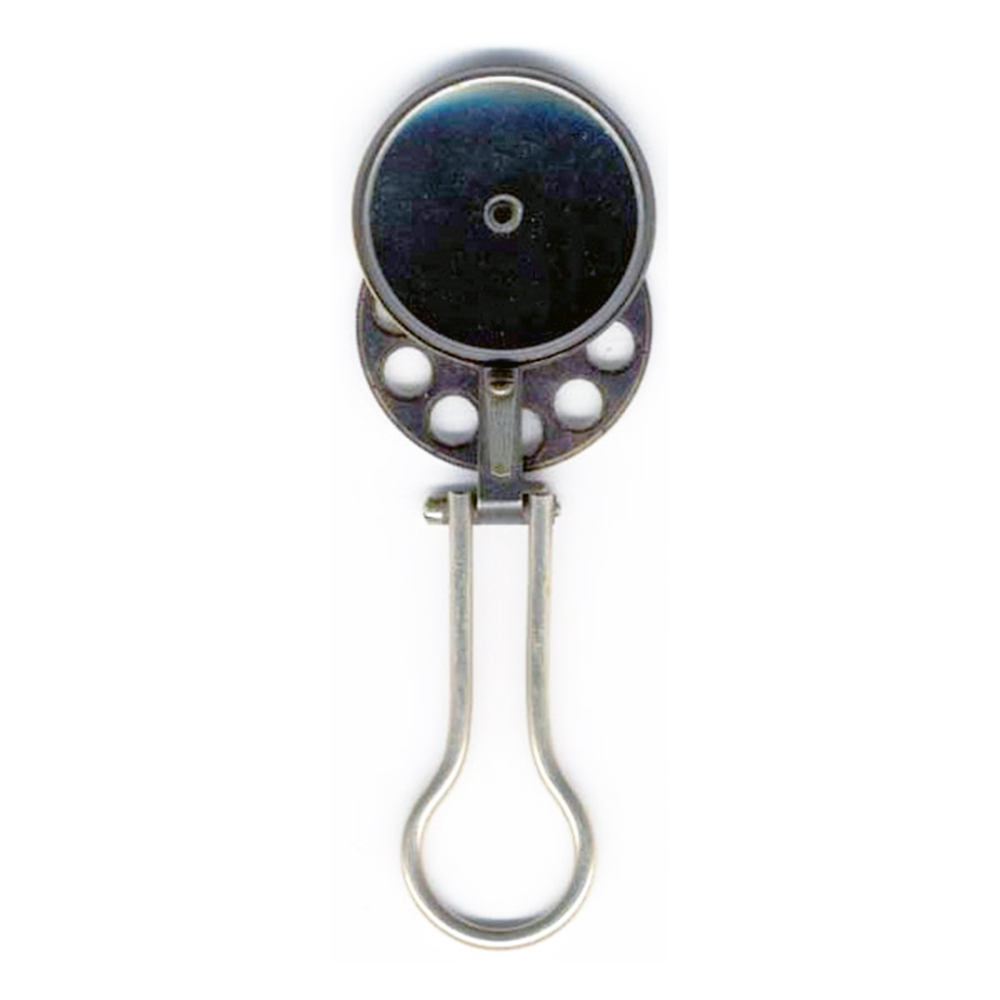
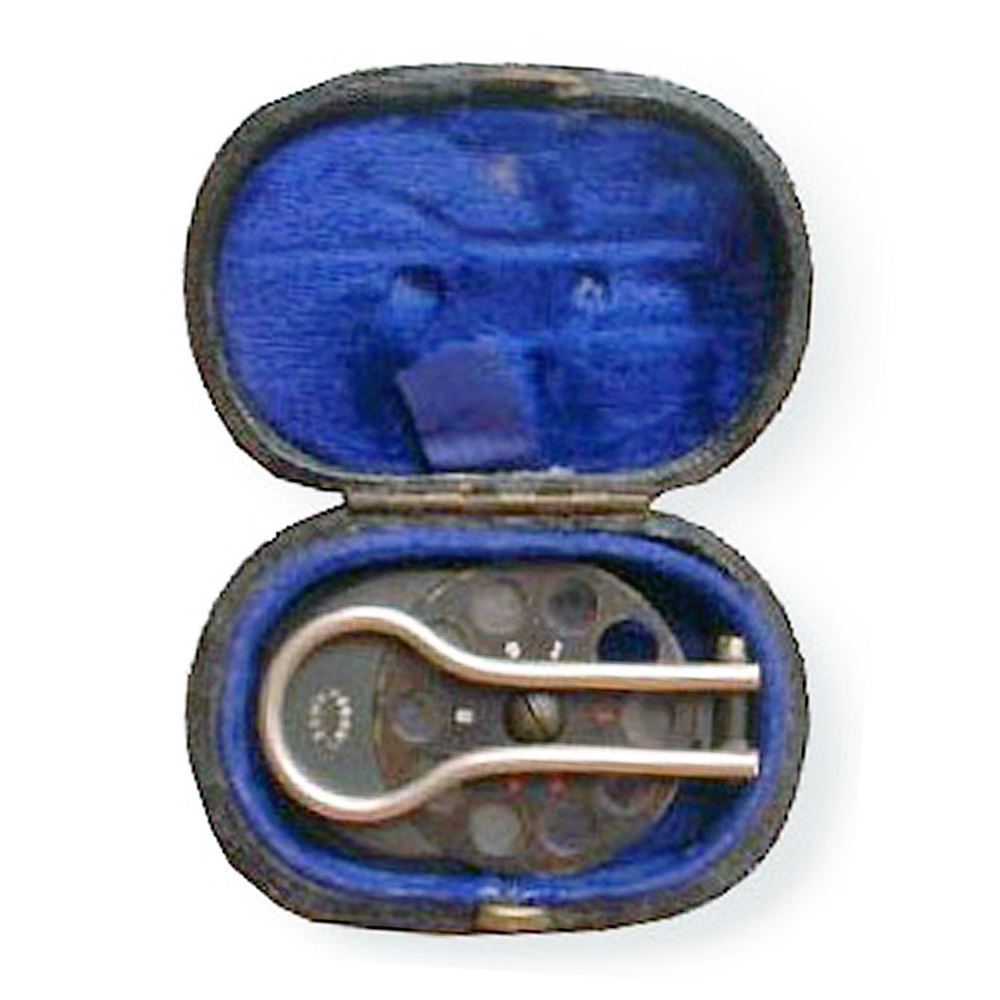
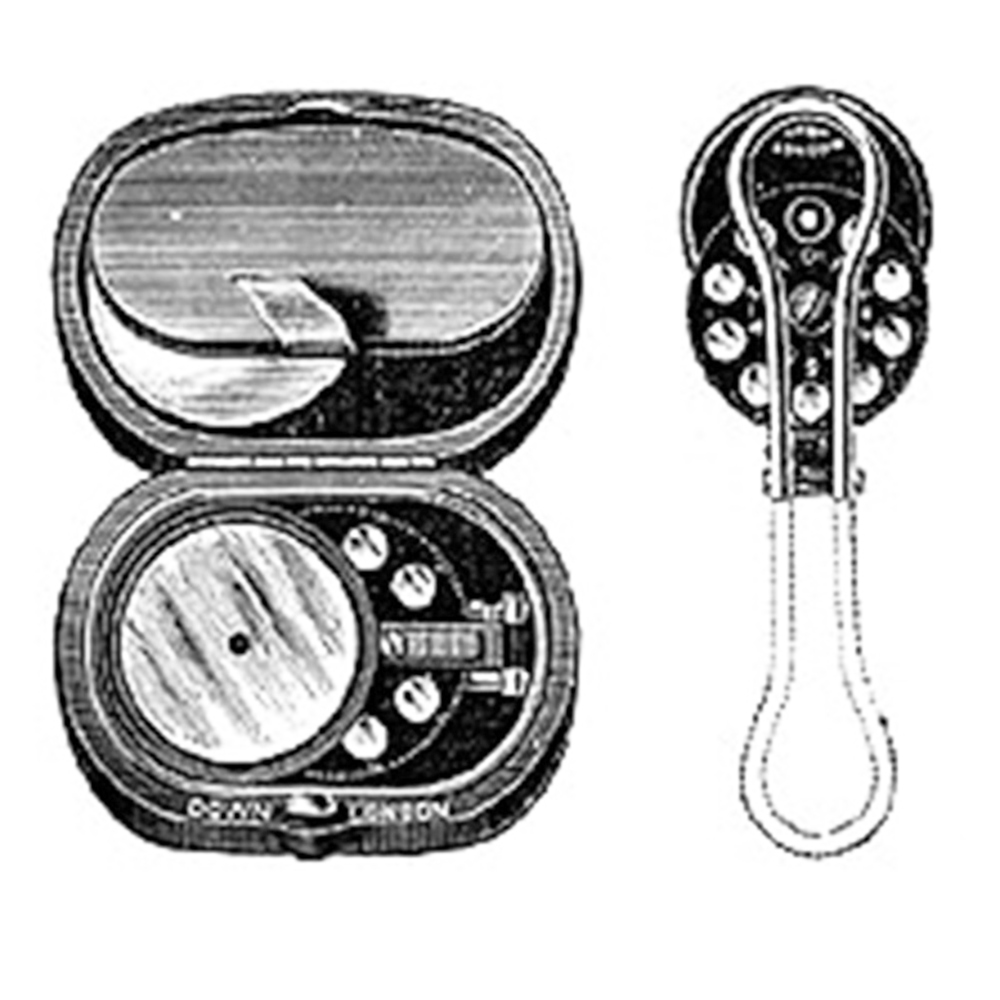
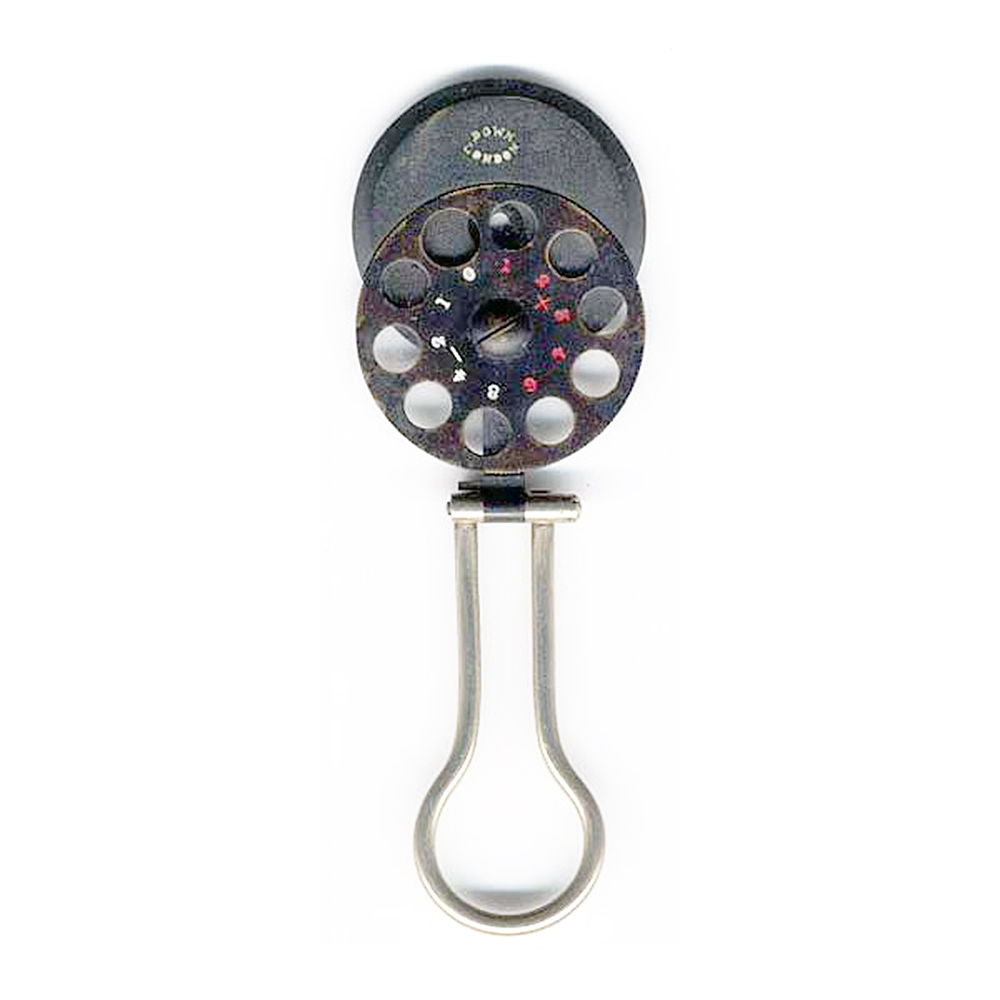
The Oldham ophthalmoscope is a rare and historically significant instrument from the golden age of British ophthalmic design. Charles Oldham first presented this scope at the International Ophthalmological Congress in 1872, where it drew immediate attention as a refined adaptation of the Loring design. Fourteen years later, in 1886, he published a report on his improved second model — the instrument represented here. This example features a distinctive disc arrangement with five convex lenses numbered 1, 2, 3, 4, and 6, and four concave lenses numbered 1, 2, 4, and 8. One disc position sits empty, originally intended for the indirect lens not present in this specimen. The handle collapses neatly for compact storage.
Who Was Charles Oldham?
Charles Oldham trained at Guy’s Hospital between 1866 and 1871, subsequently gaining Fellowship of the Royal College of Surgeons. After working across several London hospitals, he joined his father in practice in Brighton in 1873. He retired in 1880, leaving behind both a distinguished medical career and a remarkable collection of Stradivarius violins — later bequeathed to the British Museum. He died in 1907.
From Loring to Oldham
Oldham’s 1872 debut at the International Ophthalmological Congress placed him among the leading figures in ophthalmic instrument development. His adaptation of the Loring scope reflected both admiration for American optical ingenuity and a clear determination to push the design further. By 1886, his second model represented the mature culmination of that effort. Browse the full antique ophthalmoscope collection to see how Oldham’s work fits within the broader story of ophthalmoscope history.
Lens Configuration and Portability
The collapsible handle offers an elegant solution for storage and portability in the field. Altogether, the disc carries nine lenses across convex and concave configurations, covering a clinically useful range of corrections. That empty disc position originally held the indirect lens — its absence here is consistent with period illustrations. For broader context on how instruments like this shaped Victorian eye care, the College of Optometrists’ optical history collection is an excellent reference.
Rarity and Condition
Oldham ophthalmoscopes appear only rarely on the collector market. Fortunately, this example survives with its lens disc intact and its collapsing handle fully functional — making it a fine and displayable representative of one of Victorian ophthalmology’s most original design contributions.